


The ABC apprenticeship program is ABC South Texas’s NCCER-accredited, U.S. Department of Labor-registered training path for specialty trades, combining paid on-the-job training with classroom instruction in electrical, pipefitting, plumbing, sheet metal, carpentry, and related craft roles. For commercial contractors, subcontractors, suppliers, and construction professionals working across South Texas, it is one of the most practical workforce tools to address labor shortages, protect margins, staff projects reliably, and keep foreman pipelines full across a 22-county footprint stretching from San Antonio to the Gulf.
Nonresidential specialty trade contractors added 7,800 jobs nationally in August 2026, making them the single fastest-growing segment in nonresidential construction. That pressure is already showing up in South Texas backlogs, bid coverage, scheduling risk, and corridor-specific demand, which is why this discussion focuses on the workforce challenges behind specialty trade growth, the structure and benefits of the ABC apprenticeship program, safety certification options, and the planning steps contractors can use to keep project delivery profitable as industrial construction accelerates.
Merit shop construction emphasizes open bidding and ethical practices, and its workforce pipeline is now the industry’s strongest growth engine. Merit shop contractors lead national registered apprenticeship growth. Since ABC established the merit shop philosophy in 1950, its network has expanded to 67 chapters and 24,000 members nationwide. South Texas firms must ask whether they are building the trade capacity to match the work ahead.

What the Jobs Data Shows for South Texas Construction
The national data tells the first part of the story. Total construction employment rose by 22,000 jobs in August 2026. Of that, nonresidential specialty trades captured the largest share at 7,800 positions, while heavy and civil engineering added 4,400 and nonresidential building lost 1,800 jobs. Nonresidential specialty trade employment now stands at roughly 2.928 million workers, up about 3% year over year.
In the San Antonio-New Braunfels MSA, specialty trade contractors employ approximately 41,100 people as of mid-2026. That figure has been trending upward, but it is nowhere close to meeting the demand created by current backlogs. At the state level, 92% of Texas construction firms report difficulty finding qualified employees, and the construction industry faces a workforce shortage of 349,000 by 2026.
Here is what those data points translate into for contractors on the ground:
- Backlog pressure. South Texas contractors report roughly nine months of pipeline across data center, industrial, power, and healthcare projects. That backlog is only valuable if you can staff it.
- Wage competition. Skilled crafts in electrical, mechanical, HVAC, and pipefitting are seeing rising pay expectations. About 55% of firms nationally have reported projects delayed due to labor shortages.
- Crew availability. Contractors are struggling to bid specialty scopes with confidence because guaranteeing crew availability for electrical, mechanical, plumbing, or sheet metal on a fixed schedule is increasingly unreliable.
The hiring growth is real. So is the gap between available workers and the work in front of contractors.
Why Industrial Growth and Corridors Amplify Trade Demand
South Texas is not experiencing a generic construction boom. Demand is concentrated along specific corridors and in project types that pull hardest on specialty trades.
Along the I-35 corridor from San Antonio through New Braunfels, San Marcos, and Hays County, data center and AI-related investments have created sustained demand for commercial and industrial electricians, low-voltage and controls technicians, pipefitters, plumbers, and sheet metal workers. The I-10 corridor carries similar industrial growth patterns, with logistics, energy, and manufacturing projects adding to the load.
Governor Abbott’s August 3, 2026 pause on new ERCOT data center interconnection approvals adds timing risk, not a demand collapse. Approximately 200 GW of future demand is under review. That means projects already in the queue may face six to eighteen month schedule slides, but the underlying need for specialty trade capacity remains. Contractors who let their workforce planning stall during a regulatory pause will find themselves short-handed when approvals resume.
The crafts under greatest strain include:
- Electrical (power, controls, and low-voltage), critical in every industrial and data center scope
- Mechanical (pipefitting, plumbing, HVAC, sheet metal), dominant in early-phase and systems work
- Carpentry (envelope, framing, formwork), under pressure but with slightly longer lead times than mechanical and electrical
Multi-site and sequencing problems make the challenge worse. A firm managing three or four corridor projects simultaneously cannot simply move the same crew between them. Specialty craft capacity, not raw headcount, is the binding constraint.
Operational Implications for Bidding, Scheduling, and Margins
When specialty trade labor stays tight, every operational assumption needs recalibration. Contractors who keep using last year’s labor rates and availability assumptions in estimates are bidding to lose money.
Update labor assumptions in every current estimate. Assume more premium pay, more overtime or double time, and fewer available crews than historical norms. Build margin into every critical specialty trade scope.
Stress-test 30/60/90 day manpower plans. Electrical and mechanical cycles tend to cluster. When multiple projects hit their specialty peaks simultaneously, the ability to carry full crews across overlapping scopes becomes the difference between on-time delivery and margin erosion.
Add schedule contingency for electrical and mechanical scopes. Permitting, inspections, equipment lead times, and utility interconnection delays are all reasonably likely in the current environment. Your schedule should account for them rather than hoping they resolve.
Tighten subcontractor qualification and scope clarity. Because specialty trades are the bottleneck, vague scopes, late subcontractor selection, or unclear responsibilities will lead to disputes and rework. Define tasks, milestones, and hand-off points with more precision than you did two years ago.
Address utility and interconnection risk in contract language. Define responsibilities for delays, allocate costs associated with power availability and coordination with utilities, and set milestone expectations that account for the time required to secure interconnection.
These are not abstract management exercises. They are the operational activities that determine whether a nine-month backlog produces profit or produces callbacks, claims, and crew burnout.
Workforce Development: Position the ABC Apprenticeship Program as the Response
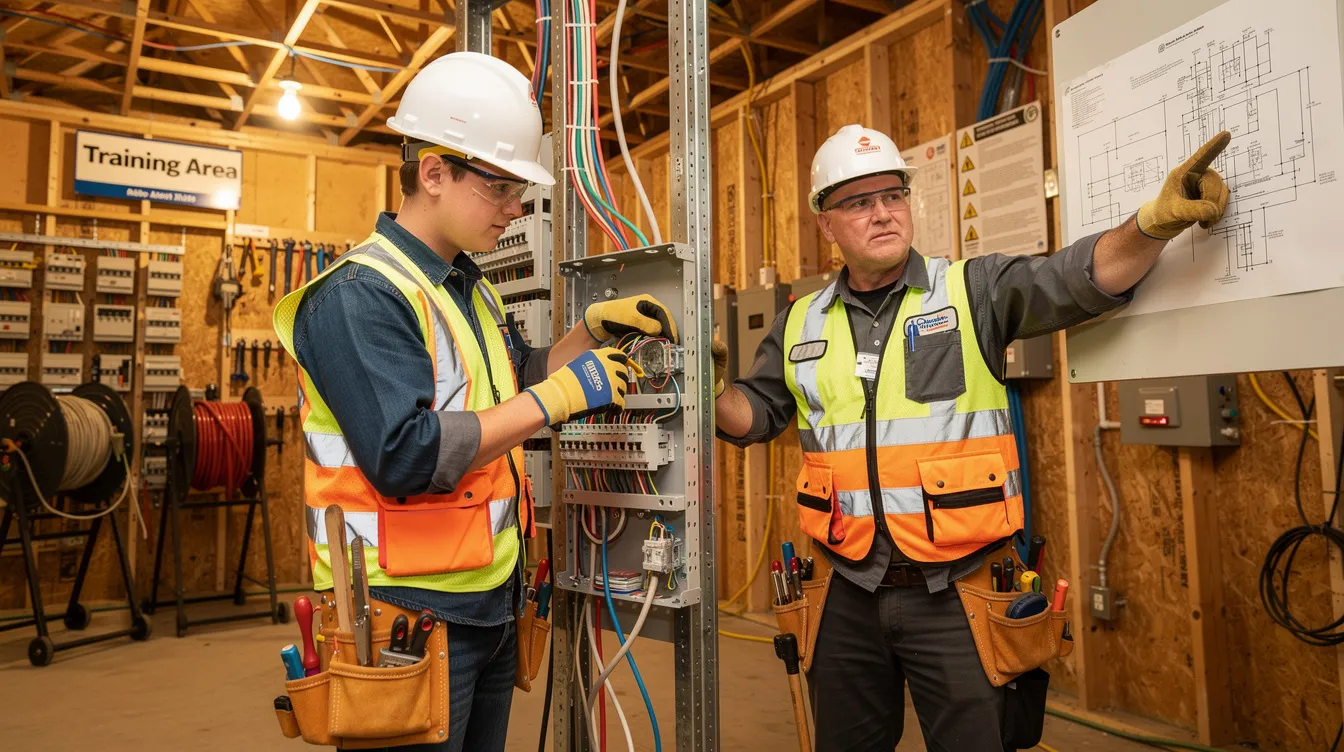
The ABC Apprenticeship Program through ABC South Texas, Inc.’s Contractors Apprenticeship Trust is built for exactly this kind of market. It combines paid on-the-job training with classroom instruction, with trade fundamentals learned through structured field work and instruction, giving contractors a structured way to grow the people they need rather than competing endlessly for the same shrinking pool of experienced hands.
The program is NCCER-accredited and registered with the U.S. Department of Labor. Programs typically last two to four years depending on the trade, with apprentices logging 8,000 hours of on-the-job work alongside evening classroom and lab instruction. Apprentices are employed full-time and earn competitive wages from day one. The application process typically requires proof of education and an interview.
Priority trades offered align directly with the crafts under greatest strain in South Texas:
| Trade | Market Demand Signal |
|---|---|
| Electrical | Data centers, industrial power, controls |
| Pipefitting | Industrial mechanical systems, process piping |
| Plumbing | Healthcare, commercial, institutional |
| Sheet Metal | HVAC, duct fabrication, industrial ventilation |
| Carpentry | Envelope, formwork, structural framing |
A Craft Trainee pathway also provides foundational, multi-trade exposure for candidates who need to build knowledge before committing to a single specialty.
Graduates earn nationally recognized journey-level credentials upon completion, supporting contractor workforce success through stronger completion outcomes and a more reliable pipeline of foremen and superintendents. For trades under state licensing, such as plumbing, apprenticeship hours count toward journeyman licensing requirements. Completing an apprenticeship can open pathways into supervisory roles, creating the foreman and superintendent pipeline that most firms desperately need.
Common trades across ABC programs nationwide include electrical, plumbing, HVAC, and carpentry. In fiscal year 2025, registered apprenticeship programs had about 324,000 participants, with 40,000 completers reported. ABC estimates 324,000 apprentices in fiscal year 2025, and the organization aims for 1 million new active apprentices in the U.S. over the coming years. Merit shop contractors are leading workforce development pipeline growth, and South Texas firms have a direct path to participate.
Veteran pathways deserve particular attention for San Antonio area firms. ABC South Texas honors Post-9/11 GI Bill benefits, allowing eligible veterans to receive stipends while in apprenticeship. Military experience in safety, leadership, and technical discipline often translates into faster progression, and the proximity to Joint Base San Antonio creates a natural recruiting channel.
For ABC South Texas members, tuition runs approximately $2,450 per apprentice. Some ABC programs nationally offer no tuition for classroom instruction; locally, the investment remains a fraction of a four-year degree and delivers a worker who produces from the first week. These programs provide pathways to high-wage careers in construction that can change a family’s future and strengthen communities across the region.
Safety, Certification, and Productivity Benefits
Workforce development builds a skilled and adaptable labor force, but the benefits extend beyond filling open positions. Apprenticeship directly improves safety, certification readiness, and field productivity.
Core skills taught in the program include safety compliance and blueprint reading, forming the foundation before apprentices advance to trade-specific modules. OSHA 10-hour cards are awarded to participants who complete the CORE curriculum. This design means every apprentice enters the field with baseline safety knowledge rather than learning by trial and error.
ABC South Texas pairs apprenticeship with its STEP safety program and OSHA training pathways. Building a safety culture early reduces accidents, injuries, and the churn that comes from a workforce that doesn’t feel protected. Programs like VitalCog and Total Human Health address mental health, substance awareness, and overall wellness, all of which directly affect retention in an industry where people leave as often because of burnout as because of pay.
NCCER certification ensures training covers both written knowledge and hands-on performance assessments. The result is measurable: contractors who invest in structured apprenticeship report better retention, increased crew stability, stronger safety leadership, and improved performance in multi-trade coordination. When supplies of experienced workers are tight, the ability to develop reliable, credentialed craft professionals in-house becomes a genuine competitive advantage.
Concrete Next Steps for South Texas Contractors
The data, the corridors, the backlogs, and the hiring signs all point in the same direction. Here is what to do about it this quarter:
- Run a skills-gap audit by trade. Map your upcoming project pipeline against your current roster. Identify where electrical, pipefitting, mechanical, or controls capacity will fall short.
- Enroll candidates in the CAT apprenticeship pipeline. The 2026-2027 cohort begins September 8. Contact ABC South Texas workforce staff to confirm current enrollment availability and trade-specific slots.
- Update bid labor lines. Add specific premium scenarios for specialty trade manpower. Model overtime, per diem, and wage escalation into every estimate for the next twelve months.
- Assign foreman succession and mentorship plans. Identify journeymen with supervisory potential. Use the apprenticeship structure to create a development path that keeps your best people engaged and growing.
- Register affected crews for STEP and OSHA courses immediately. Safety incidents accelerate turnover. Proactive certification stabilizes your workforce.
- Hold one internal meeting this quarter to map apprentices to near-term projects. Align learning objectives with production schedules so that apprenticeship and delivery support each other.
Specialty trade hiring continues to set the pace in South Texas construction. The contractors who build workforce pipelines now, through structured apprenticeship, deliberate retention, and honest workforce planning, will be the ones who can bid with confidence and deliver on schedule when the next workload peak arrives. The time to apply that knowledge is before the crews you need are working for someone else.


