


Introduction: Why Autonomous Excavators Matter for the South Texas Construction Industry Safety Plans
Autonomous excavators are no longer a prototype concept confined to trade-show demos. These heavy earthmoving machines, equipped with advanced robotics and AI, are performing paid commercial work on active construction sites across Texas and more than 20 other states. For contractors operating in San Antonio and across the South Texas footprint, this shift in autonomous construction equipment demands an immediate, practical conversation about worker and jobsite safety.
The construction industry is under sustained pressure from labor shortages (labour shortages) and accelerating project schedules, particularly along the I-35 and I-10 corridors where industrial, infrastructure, and manufacturing work continues to grow. Autonomous machines offer one answer to that pressure: moving dirt on schedule with fewer operators in high-risk positions. But the safety implications are significant, and they require more than a software update to your existing safety plan.
This article is not about robotics hype or equipment marketing. It is written from ABC South Texas’ perspective for contractors, project managers, safety directors, and field supervisors who need to understand what changes when heavy equipment operates without a human in the cab and why that matters to the business case for safety planning around autonomous excavators. NIOSH issued a bulletin in October 2026 specifically addressing safety in construction robotics, flagging human-robot interaction, sensing limits, and coordination challenges on dynamic jobsites. Construction Executive has covered autonomous construction equipment as an active national safety topic, reinforcing that worker exposure does not disappear just because the cab is empty.
What follows is a practical walkthrough of the specific changes South Texas contractors should make in pre-planning, traffic control, supervision, and crew communication before allowing autonomous equipment on their construction sites.
Autonomous Construction Equipment 101: What They Are and Where They Are Used
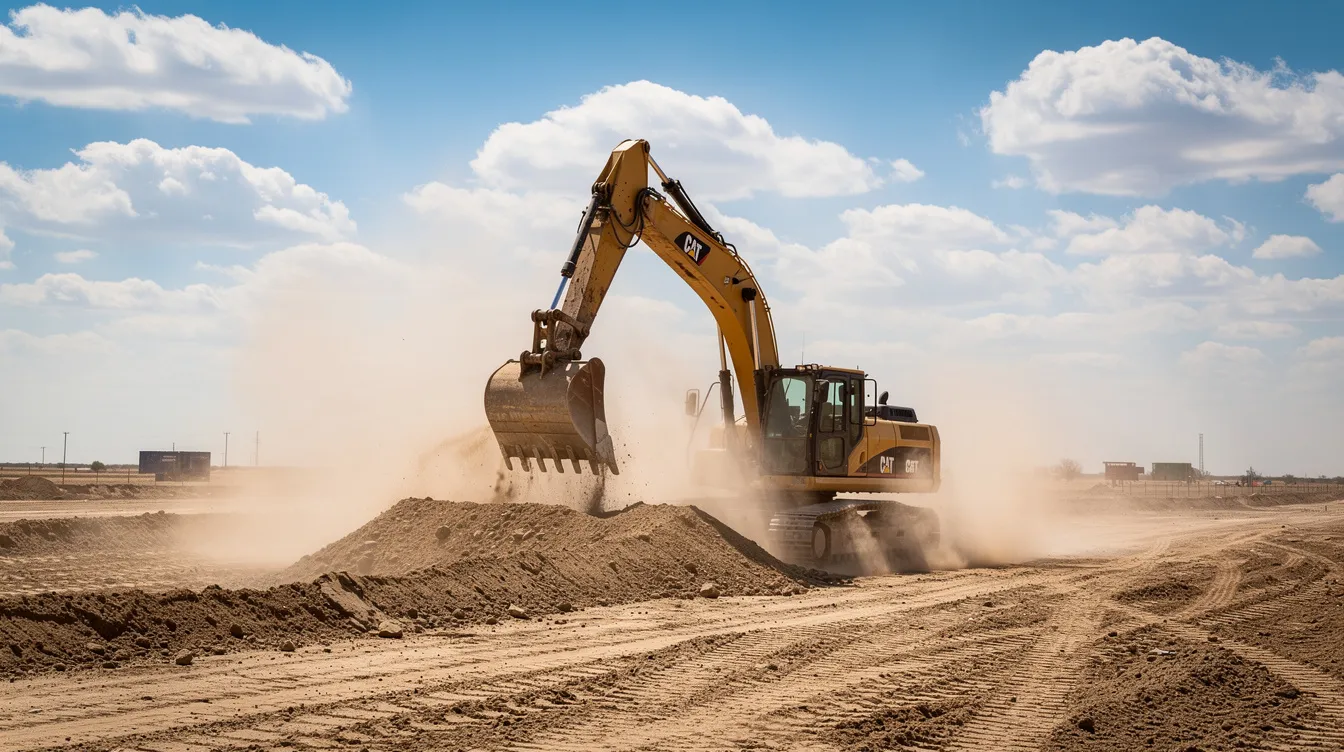
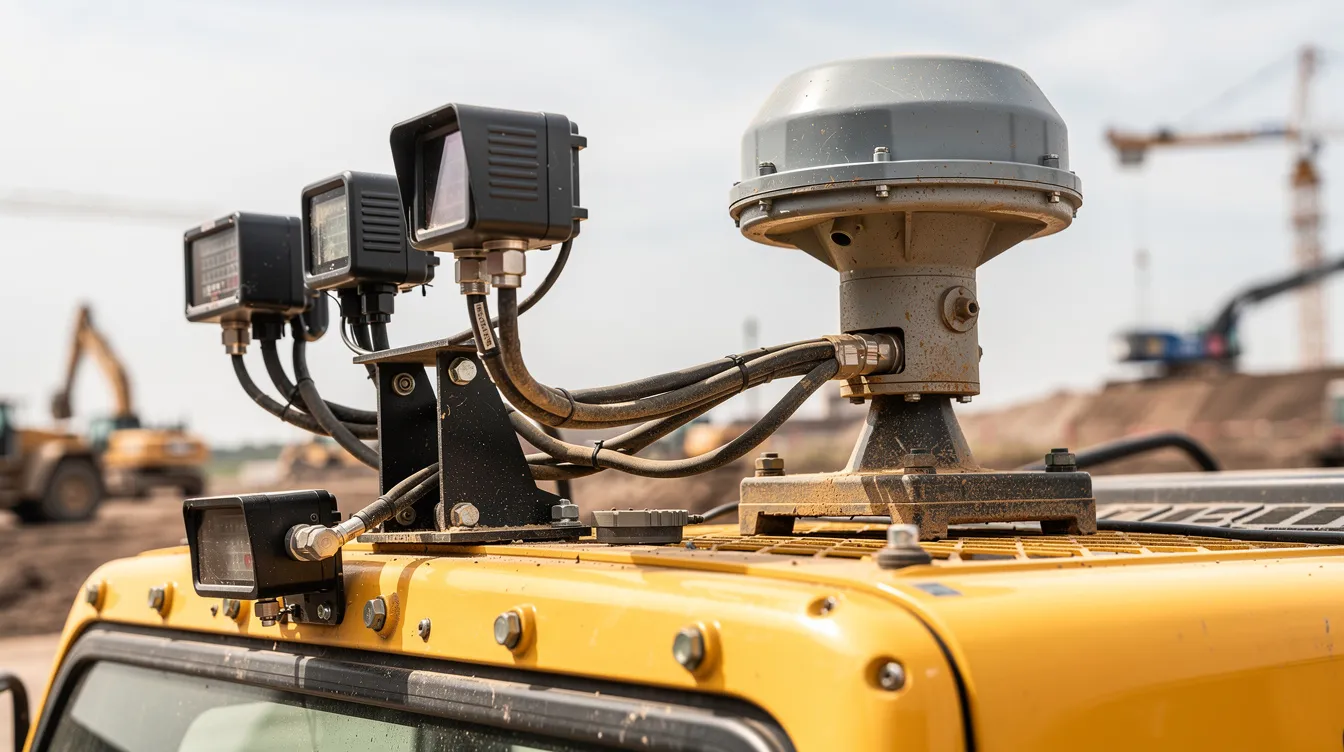
Autonomous excavators are heavy equipment that can dig, swing, and load material using GPS, sensors, and software with minimal human input. They use artificial intelligence, GPS, and LiDAR sensors to perceive the environment, plan movements, and execute tasks without direct human intervention in the cabin. GPS and RTK positioning systems pinpoint the machine’s exact location within centimeters, while LiDAR and radar sensors map the surrounding environment in 3D. Cameras and computer vision systems handle site monitoring and bucket load estimation. Hydraulic actuators translate digital commands into physical excavator movements, turning a digital site model into real dirt moved.
The spectrum of autonomy matters here. A traditional excavator requires a skilled operator making every decision from the cab. A machine with GPS or machine control assistance still has a human at the controls but benefits from digital technology guiding grade and depth. A truly autonomous or semi-autonomous excavator operates according to a programmed plan, following a continuous digital loop of sensing, planning, and executing tasks. Sensors continuously scan the workspace, detecting terrain changes and obstacles in real time. Ongoing technological development is improving how autonomous excavators make decisions and adjust their operation strategies within a programmed envelope. Onboard sensors also log performance metrics for predictive maintenance, keeping the equipment running between service intervals.
Autonomous excavators are used for mass excavation, trenching, and utility installation. The technology could enable multiple autonomous machines working together on construction sites, coordinating haul trucks and support equipment through a shared control system. Integration with other technologies like BIM and IoT can improve autonomous excavator performance by connecting the machine’s work to the broader digital project model. Autonomy is most common today in mining and quarries, and with large earthmoving jobs on flat, controlled sites. Caterpillar and John Deere are among the manufacturers developing autonomous equipment. Caterpillar’s autonomous trucks, for example, improve productivity by 20 to 30 percent in mining operations. That success is now driving the shift toward more complex construction sites and corridor projects. Many autonomous machines still require human operation or remote control for portions of their work cycle, particularly during complex positioning or when conditions exceed the system’s trained envelope. Autonomy changes crew roles and safety responsibilities rather than eliminating them.
How Autonomous Excavators Change Risk on a Live Construction Site
The central safety question is not whether autonomous excavators are capable. It is this: autonomy changes who is exposed to risk, when they are exposed, and how incidents can occur around an excavator that is moving without an operator in the cab. When the operator’s seat is empty, the risk shifts toward workers on the ground, spotters, truck drivers, and anyone else sharing that construction site.
Traditional struck-by and caught-between hazards from heavy equipment still apply. But the patterns change because the machine follows software logic rather than real-time human judgment from the cab. An autonomous excavator operating in a defined exclusion zone can reposition faster than a worker expects, or approach a boundary from an angle that no human operator would choose. Real-time environmental sensing helps autonomous excavators adjust actions based on conditions, but that sensing has limits, and those limits create new gaps. Geofencing technology prevents autonomous machines from entering unsafe areas, yet geofences are only as reliable as their calibration and the discipline of everyone working nearby.
Dynamic conditions at South Texas construction sites make this harder because the site itself can change form as work progresses. Trucks arrive, subcontractors enter the work area, layout changes happen mid-shift, and weather or lighting shifts can quickly invalidate a “clear” autonomous work zone if controls are not updated. NIOSH’s October 2026 bulletin on construction robotics emphasizes that human-robot interaction, sensing, communication, and coordination challenges intensify as sites change. Fixed barriers or exclusion zones alone are often inadequate because construction workspaces are continually reconfigured. Sensor systems can degrade due to dust, glare, heavy rain, or poor lighting. Worker complacency can grow after many routine, uneventful cycles, creating a dangerous assumption that the machine will always stop.
Hazards to Re-Evaluate First: Struck-By, Backover, and Human–Machine Interaction
When autonomous equipment is proposed for a job, these three hazard categories should be the first items revisited in any excavation safety plan.
Struck-by hazards require immediate attention. Workers or spotters entering the swing radius of an autonomous excavator face risk from a machine that does not glance over its shoulder before rotating. Trucks approaching an autonomous loading excavator must follow strict approach routes because the machine’s cycle may not pause for an unannounced arrival. Pedestrians crossing haul routes on active construction sites face struck-by injuries when equipment moves based on programmed logic rather than an operator’s visual sweep. Autonomous excavators remove operators from hazardous environments to enhance safety, but that protection applies to the operator, not necessarily to everyone else on the ground. Autonomous excavators reduce operator exposure to hazardous conditions, and remote control systems enhance safety by keeping operators away from danger. Yet people around the machine face new exposures.
Backover and mobile-equipment hazards remain critical. OSHA’s existing guidance on backing safety, including trained spotters, continuous driver-spotter visibility, high-visibility clothing, and proximity detection devices, applies directly to scenarios where the equipment’s movements are software-controlled rather than joystick-controlled. Internal traffic control plans must account for a machine that may back, reposition, or traverse without a human making that split-second call.
Human-machine interaction risks unique to autonomous operations include workers assuming sensors will detect them in every position, overreliance on geofenced zones that may lack physical barriers, and confusion about whether the machine is in manual, remote, or autonomous mode. They reduce accident rates by eliminating fatigue-related human error, but that benefit holds only when operator safety is maintained for nearby workers as well, not just for the person removed from the cab. In South Texas, common jobsites conditions (dust, intense sun glare, sudden storms, night work, and congested industrial yards) can interfere with sensors or visibility, raising the stakes for autonomous equipment. Contractors should treat any change in site layout, trades working in the area, or environmental conditions as a trigger to re-evaluate these three hazard categories before continuing autonomous operation.
What Must Change Before the Machine Arrives: Plans, Procedures, and Permissions
Safety planning for autonomous excavators has to start before the equipment is mobilized, ideally during bid review, preconstruction meetings, or early project planning. Early planning should focus on where autonomy fits the work and where people still need to handle setup, oversight, or exceptions. Autonomous excavators face challenges like high initial costs and complex site conditions, and contractors who do not address the safety architecture in advance will find themselves reacting instead of leading.
Several key documents need explicit updates. Site-specific safety plans, job hazard analyses, pre-task plans, excavation plans, and internal traffic control plans must all address autonomous operation by name. Generic templates that reference “heavy equipment” without distinguishing between operator-controlled and software-controlled machines will leave gaps that cost time, credibility, and potentially lives.
Pre-planning should define autonomous work zones, geofenced areas, and approach paths for haul trucks and support equipment, including exactly where humans may be and under what conditions. Contractors should agree in advance on who has the authority to start, pause, override, or shut down autonomous operation. Document conditions requiring an immediate stop: loss of connectivity, sensor faults, unauthorized entry into exclusion zones, or unexpected obstacles. Mode-change rules also belong in the safety plan, covering protocols for switching between manual operation, remote control, and autonomous modes, with autonomous mode locked out during maintenance or refueling. These controls belong in a broader construction safety and wellness strategy, not bolted on after the machine is already digging.
Redesigning Exclusion Zones and Traffic Control Around Autonomous Equipment
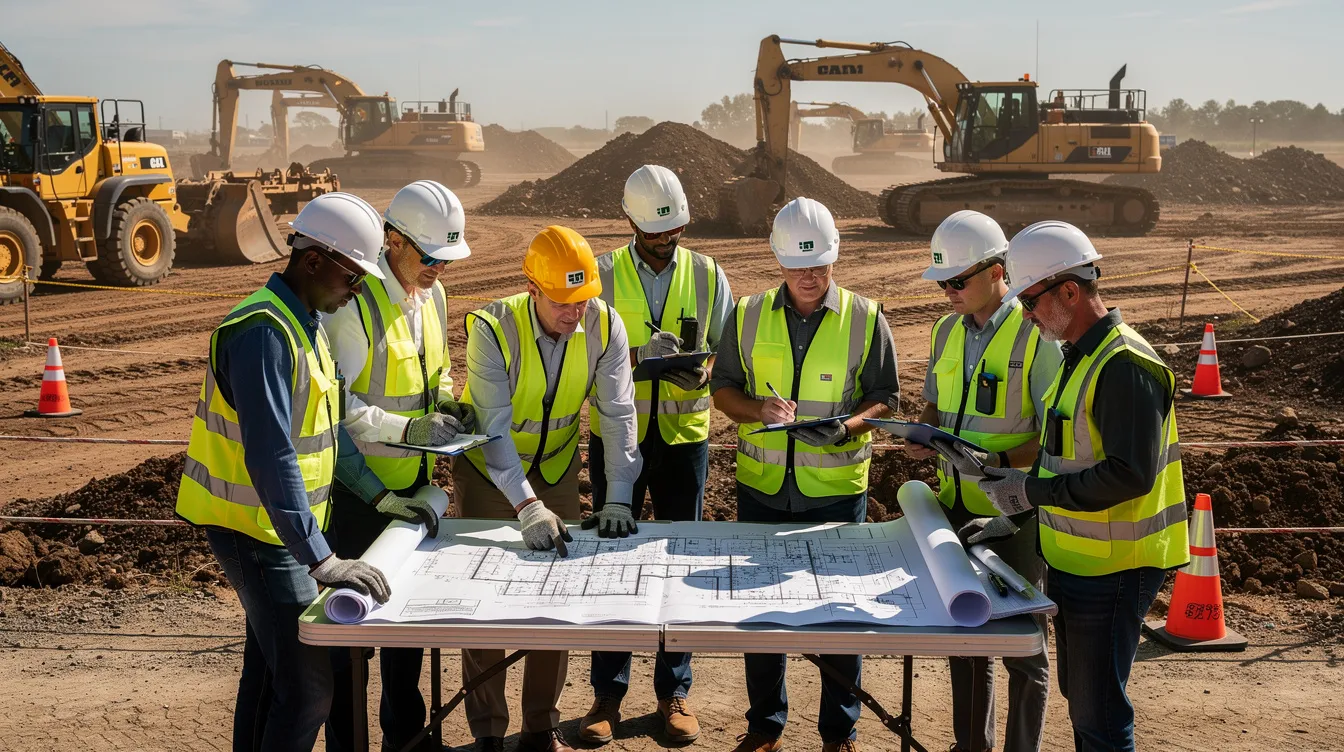
Traditional spotter-based approaches and ad hoc pedestrian routes are not sufficient once excavators can move without an operator’s direct line of sight from the cab. The machine’s sensing has different blind spots than a human operator, so exclusion zones must be designed around the system’s actual detection envelope, not simply a cab window.
Establishing and marking exclusion zones around the excavator’s swing radius and travel path requires physical barriers, signs, and high-visibility markings that remain visible in South Texas heat, dust, and low-light conditions. Barricades must be inspected and maintained daily because, on a busy construction site, they get moved, knocked over, or obscured by material deliveries. Reflective markers or supplemental lighting may be needed for dawn, dusk, or night shifts.
Internal traffic control plans should designate haul routes clearly separated from autonomous zones, with no-go zones for foot traffic, one-way patterns where practical, and limited crossing points for workers and subcontractors. Simple, enforceable rules work best: no worker enters the autonomous zone without contact with the autonomy supervisor, and all trucks must stop at clearly defined control points before entering the loading area. OSHA’s backover-prevention concepts, such as trained spotters, rear-view cameras, radar and ultrasonic proximity alarms, and tag-based detection systems, apply directly to vehicles interacting with an autonomous excavator. The solutions may be informational rather than regulatory requirements, but they represent proven practice for preventing mobile-equipment incidents on any construction site.
New Expectations for Foremen, Superintendents, and Safety Leaders
An experienced excavator operator in the cab acts as a local safety control, watching the swing, checking clearances, and communicating with nearby workers. Without anyone in the cab, field leaders must step into a more deliberate coordination role. This is not optional, and it cannot be delegated to the software.
Foremen and superintendents should manage line of sight, radio communication, and task sequencing when autonomous excavators are active. That means clearly assigning spotters or designating an “autonomy supervisor” to monitor status displays, receive sensor fault reports, and make go/no-go determinations. Daily or per-shift reviews of the autonomous work area are essential: check barricades, verify geofences, confirm no new utilities or excavations conflict with the programmed plan, and adjust for schedule changes that bring other trades nearby.
Multi-employer site complexity is common across South Texas, particularly on corridor projects and in industrial facilities. Leaders should include autonomous-equipment topics in daily coordination meetings, JSAs, and toolbox talks. Automation may help address current construction labor shortages, but this shift is also part of a broader industry-wide technological change that creates real business pressure to adapt. Autonomous equipment can create higher-paying jobs in technology, oversight, and maintenance. Studies show autonomous equipment won’t replace many industry jobs outright; autonomous vehicles may reduce job loss by only 0.06% to 0.13%. But roles will change, and safety leaders should build autonomous-equipment readiness into broader safety management strategies to stay ahead of that shift.
Training and Communication: Preparing Crews for Autonomous Excavators
Effective training and communication can prevent the most dangerous autonomy-related failures, including assuming the machine will always stop for a worker who enters its path. Real-time monitoring improves operational efficiency and accuracy, but it only helps if people near the machine understand what it does and does not detect.
Training should cover how autonomous excavators work, the limits of lidar sensors and geofencing, mode-indicator lights or displays, emergency-stop locations, and clear rules for entering exclusion zones or crossing routes. Realistic scenarios belong in every training session: a truck entering the zone unexpectedly, a sensor fault alarm, or a change in plan that moves the excavator closer to other work areas. Crews should also know when the system can and cannot compensate for uneven ground or sloped conditions. Short, task-based competency checks verify that workers can recognize and respond appropriately, not just sit through a classroom session.
Clear radio and hand-signal protocols between spotters, truck drivers, and the person supervising the autonomous equipment are non-negotiable. Escalation paths should be spelled out so that anyone who sees something wrong can call a stop without hesitation. In South Texas, where crews often include both English and Spanish speakers, bilingual briefings and simple visual aids improve comprehension and compliance. Contractors already using machine learning tools and digital technology on site can extend those governance habits to autonomous operations. For firms looking at how broader culture and governance support safe use of robotics and autonomous equipment, resources on AI safety technology guidance provide useful context.
Balancing Safety, Productivity, and Ergonomics Benefits
Autonomous excavators can reduce certain risks and physical strain when used correctly, but they are not risk-free or self-policing. The benefits are real and worth understanding alongside the residual hazards.
Autonomous systems improve productivity by reducing human error. Autonomous systems can increase productivity by 20 to 30 percent, consistent with Caterpillar’s documented gains in mining operations. These machines can operate continuously without fatigue, improving productivity and efficiency. Autonomous machines can operate longer hours, improving resource efficiency, and autonomous excavators can work around the clock when project schedules demand it. They improve accuracy when excavating precise material amounts and perform tasks precisely to reduce rework and material waste. Autonomous excavators can significantly lower operating and fuel costs through optimized controls. Autonomous equipment reduces fuel consumption through intelligent routing and improves fuel efficiency. Autonomous excavators optimize energy use for maximum effectiveness across the work cycle.
On the safety and ergonomics side, removing operators from deep trenches, unstable slopes, or prolonged exposure to extreme heat and dust reduces musculoskeletal injuries and heat illness, consistent with ABC South Texas’ existing guidance on ergonomics and injury prevention. Electric autonomous excavators significantly reduce carbon footprints, and electric autonomous equipment is the fastest-growing segment through 2030. Robotic devices are expected to double the construction robotics market, and their adoption can transform construction and building work by improving productivity and operational efficiency across the market.
Insurers, owners, and general contractors will see value in reduced exposure and more predictable operations, but only when documented safety and performance progress confirms that risk is actually going down. Contractors should track leading indicators specific to autonomous equipment: near-misses in exclusion zones, emergency-stop activations, sensor faults, and unauthorized overrides. That data refines controls and builds the documented record that customers and carriers expect.
South Texas Implementation Checklist for Autonomous Excavators
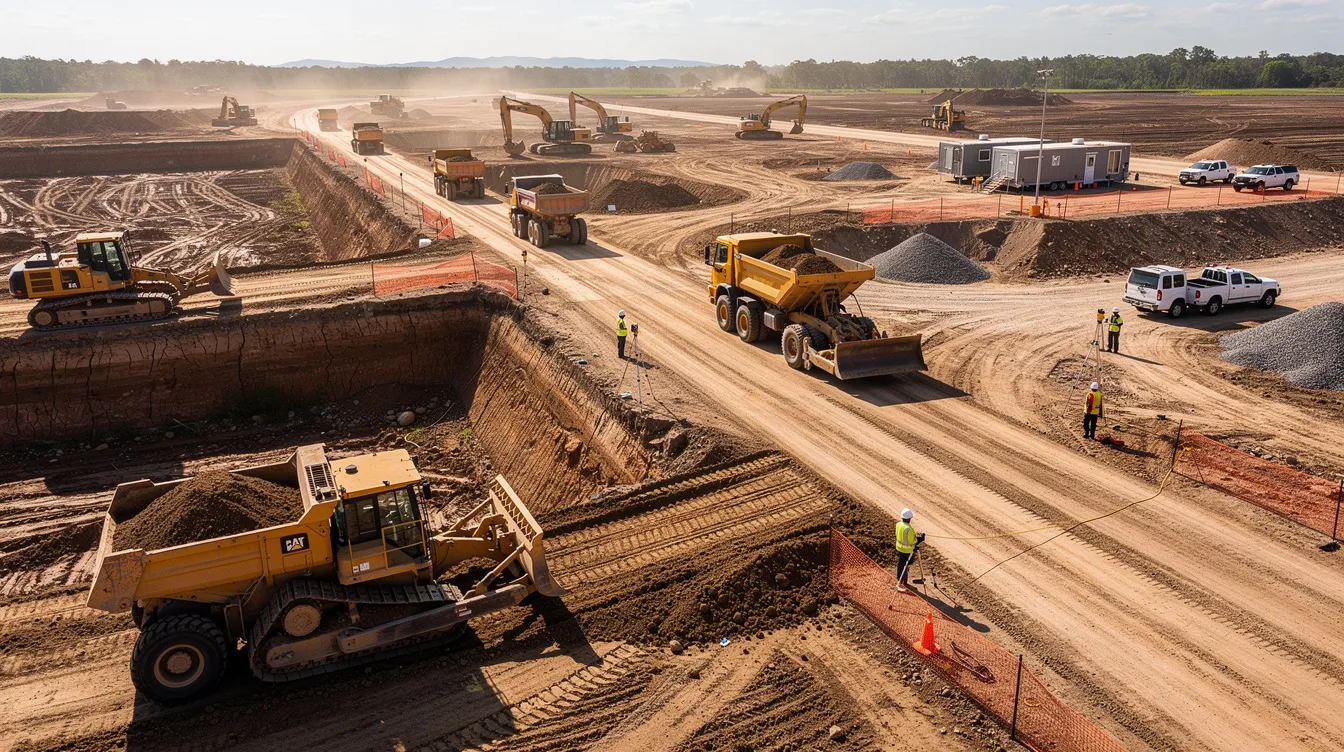
Before allowing autonomous excavators on site, contractors should follow a sequence of verifications they can adapt into their own pre-mobilization forms or JSAs.
First, confirm that the equipment vendor provides complete safety documentation, including sensor performance specifications in heat, dust, and varied lighting; documented failure modes; and mode-change instructions for all operators and supervisors. Second, update site-specific safety and traffic control plans to explicitly address autonomous operations, defining exclusion zones, access rules, and designated approach paths for trucks. Third, assign clear authority for overrides and emergency stops, stipulating conditions such as sensor loss, unauthorized presence, connectivity failure, or unexpected obstacles that require immediate intervention. Fourth, train all affected workers and subcontractors on how autonomous excavators operate, what the zones and modes are, how to recognize cues and risks, and what to do in an emergency, using bilingual or visual training aids as needed. Fifth, plan for daily or per-shift reviews whenever site conditions change substantially, including layout shifts, weather, new trades arriving, or schedule adjustments.
South Texas firms should plan around high-heat work hours that affect both sensor clarity and crew alertness, congested corridor access along I-35 and I-10 with heavy truck traffic, and industrial plant rules that may restrict wireless communications and equipment movement. This checklist should align with broader construction safety and wellness practices and any OSHA or owner requirements on the project. Firms looking to save money and reduce risk simultaneously should pilot autonomous excavators on simpler, more controllable sites first, then expand to complex jobsites as procedures, training, and supervision prove effective. Companies that develop strong controls early will be better positioned for growth as the technology matures and demand increases across the industry.
Conclusion and Next Steps for ABC South Texas Members
Autonomous excavators are part of today’s autonomous construction equipment landscape. They are not a future concept. South Texas contractors who may encounter these machines on corridor projects, industrial sites, or large earthwork jobs need a clear safety plan before the equipment arrives, not after the first near-miss.
Autonomy can reduce certain exposures and improve productivity, yet only if contractors treat it as a change in risk profile that requires new controls, clear supervision, and disciplined communication on every construction site. The innovations in robotics, software, and automation reshaping the industry do not replace the need for human knowledge, leadership, and accountability in the field.
A concrete next step: schedule a review of your excavation and mobile-equipment procedures to add autonomous-equipment protocols. Use this article as a discussion tool in your next safety committee meeting or foremen briefing. Connect with ABC South Texas for safety education, OSHA training, and resources that support integrating new technology into a strong safety culture. Merit shop contractors who build their ability to adopt technology safely, through sound planning, training, and development of their people, will operate more efficiently and compete from a position of strength across South Texas and beyond.


