


September’s Tight Labor Signal and Why It Matters Now
In September 2026, every state in America posted a construction unemployment rate below 10%, reinforcing the construction backlog labor shortage facing contractors. All but three states came in below 6%. At the same time, BLS reported that Texas recorded a statewide unemployment rate of 4.4%, keeping competition for skilled workers intense across the state’s commercial and industrial markets.
The construction industry faces a persistent skilled labor shortage, and the September numbers confirm it is not easing. The construction sector was projected to need about 349,000 additional workers by 2026 to meet demand, and the current data suggests that gap has not closed.
A construction backlog labor shortage is exactly what it sounds like: contractors have a full pipeline of awarded work, but the supply of skilled workers and field supervisors needed to execute it remains constrained. When backlogs are strong and unemployment is low, every new project becomes a staffing equation with fewer available solutions.
For South Texas contractors, this combination should change the way you think about bids, staffing, and supervision over the next three to six months. This article is written from ABC South Texas’ perspective for commercial and industrial firms in San Antonio and across the I-35 and I-10 corridors, including owners, executives, estimators, project managers, safety directors, HR leaders, and field supervisors. The focus is practical decisions, not abstract economics: how a tight labor market affects bidding and project execution, where recruitment and retention pressure shows up first, how to adjust crew planning and subcontractor coordination, and which workforce development resources, including apprenticeship options, can help protect schedule, safety, and margins.
What the September 2026 Unemployment Numbers Actually Show
BLS and ABC measure state construction unemployment using not seasonally adjusted household survey data that tracks workers who identify as having previously worked in construction. In September 2026, every state stayed under 10%, a historically tight reading for the construction industry. The national construction unemployment rate was 3.5%, down from 3.8% a year earlier.
The United States overall unemployment rate stood at 4.2% in September 2026, reflecting a still-firm labor market across all industries. Construction is running tighter than the national average.
Texas recorded a 4.4% statewide unemployment rate in September 2026 and ranked 37th among states. That places Texas in the middle of the pack: neither slack nor overheated, but tight enough to create real staffing pressure. Texas construction jobs grew by 5.1% from 2023 to 2024, reflecting sustained demand that has not let up. Nationally, 28.9% of construction workers are Hispanic or Latino, a demographic reality that shapes workforce pipelines across Texas and South Texas in particular.
These data are statewide, not specific to San Antonio or individual counties. Regional takeaways are inferences that contractors should test against their own experience and local conditions.
Over the prior 12 months, Texas added more than 150,000 nonfarm payroll jobs, signaling continued growth that sustains a constrained labor pool for the construction industry.
Key takeaway: All 50 states posted construction unemployment below 10% in September 2026. Texas remains tight at 4.4% statewide.
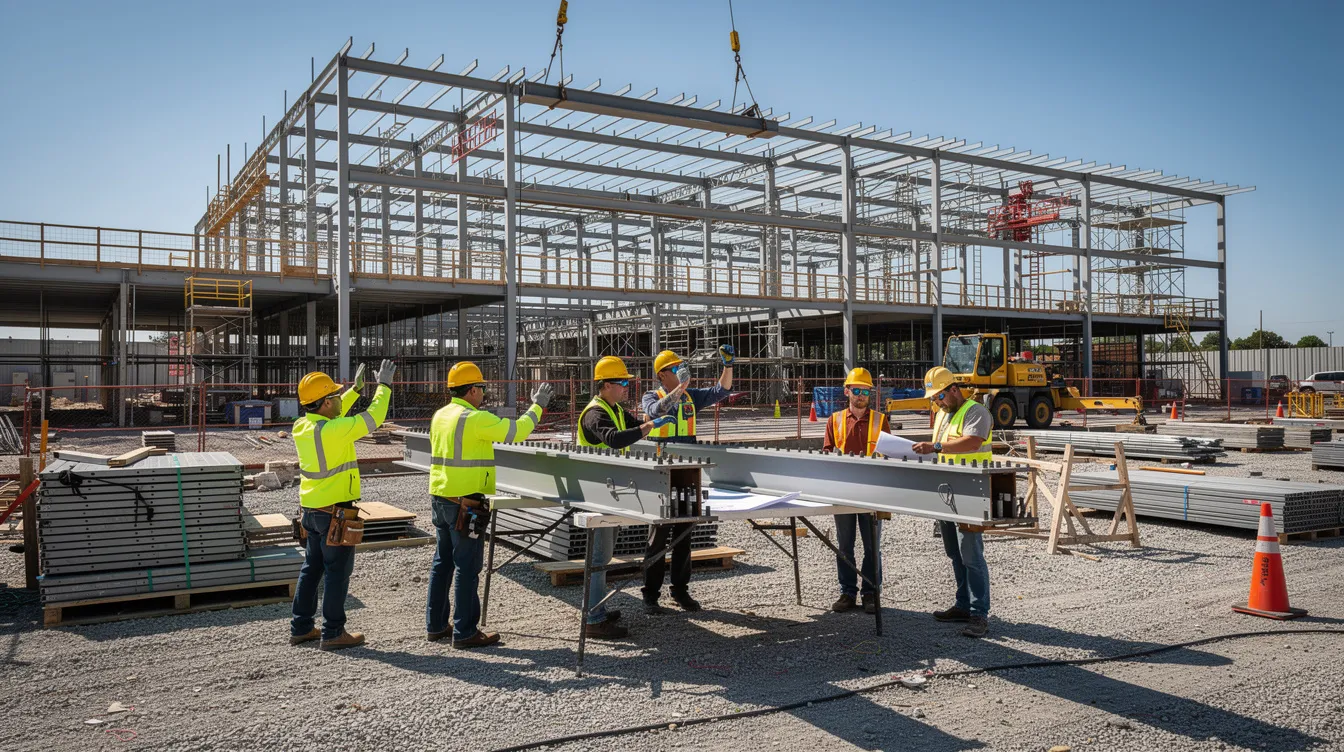
How Low Unemployment Feeds a Construction Industry Backlog Labor Shortage
When construction unemployment stays this low, the pool of experienced craft workers and foremen available for hire shrinks. A construction backlog measures the volume of work contracted but not yet completed. Nationally, the construction backlog averages around 8.7 months, and contractors involved in data center work report backlogs averaging 11.3 months. That volume of committed work needs crews, and those crews are increasingly hard to find.
An expanding backlog does not always signal healthy business growth; it can artificially inflate backlog durations when firms cannot staff projects fast enough to convert awards into revenue.
Here is the feedback loop that drives a construction backlog labor shortage:
- Strong backlogs encourage aggressive bidding, which increases demand for crews
- Increased demand further tightens the labor market for high-demand trades like electrical, mechanical, and civil
- Competition from other sectors has intensified, pulling workers away from construction into logistics, energy, and technology jobs that offer competitive pay
- Even modest schedule accelerations, change orders, or owner-driven scope increases can outstrip available manpower
Currently, 80% of construction companies struggle to find skilled workers, and over 404,000 construction positions remain unfilled in the United States. The Associated General Contractors of America have noted that the number of jobseekers with construction experience has sharply declined, making further job additions more difficult.
Along the I-35 and I-10 corridors, sustained industrial, healthcare, and infrastructure projects make it harder for South Texas firms to “borrow” crews from nearby regions. Communities along these corridors are growing, and the work is stacking up.
Why This Matters for Texas Bid Strategy in Late 2026
Low construction unemployment changes the risk profile of every bid. Labor assumptions become more fragile, especially for complex commercial and industrial projects where specialized trades drive the critical path.
The labor shortage escalates labor costs and creates a margin squeeze for contractors. Higher construction costs result from competitive wages, bonuses to retain key personnel, and additional operational expenses driven by labor scarcity. Many contractors are forced to turn down new project bids due to insufficient workforce, a reality that feels counterintuitive during a growth period but protects execution quality.
Here are the bid elements that estimators and executives should revisit in this environment:
- Crew-size assumptions: Can you actually staff this project at the levels your estimate requires?
- Start dates: Is your assumed mobilization realistic given current hiring timelines?
- Critical-path durations: Are you accounting for slower productivity from mixed-experience crews?
- Overtime allowances: Are you budgeting for the premium pay that tight markets demand?
- Subcontractor availability: Have your key subs confirmed they can staff their scopes?
- Escalation clauses: Do your contracts protect you if labor costs rise during execution?
Construction firms risk extending project timelines because of labor shortages, and contractors increasingly experience delays as a result. Labor shortages can prolong project timelines and execution delays that may trigger liquidated damages.
The industry is shifting towards prefabrication and modular construction to reduce on-site labor demands, and firms hoping to manage bid risk should evaluate where off-site fabrication can reduce field labor peaks. Use the September unemployment release as a formal trigger to tighten your go/no-go criteria, especially for work that overlaps with existing major projects. More selective bidding protects both backlog quality and field execution.
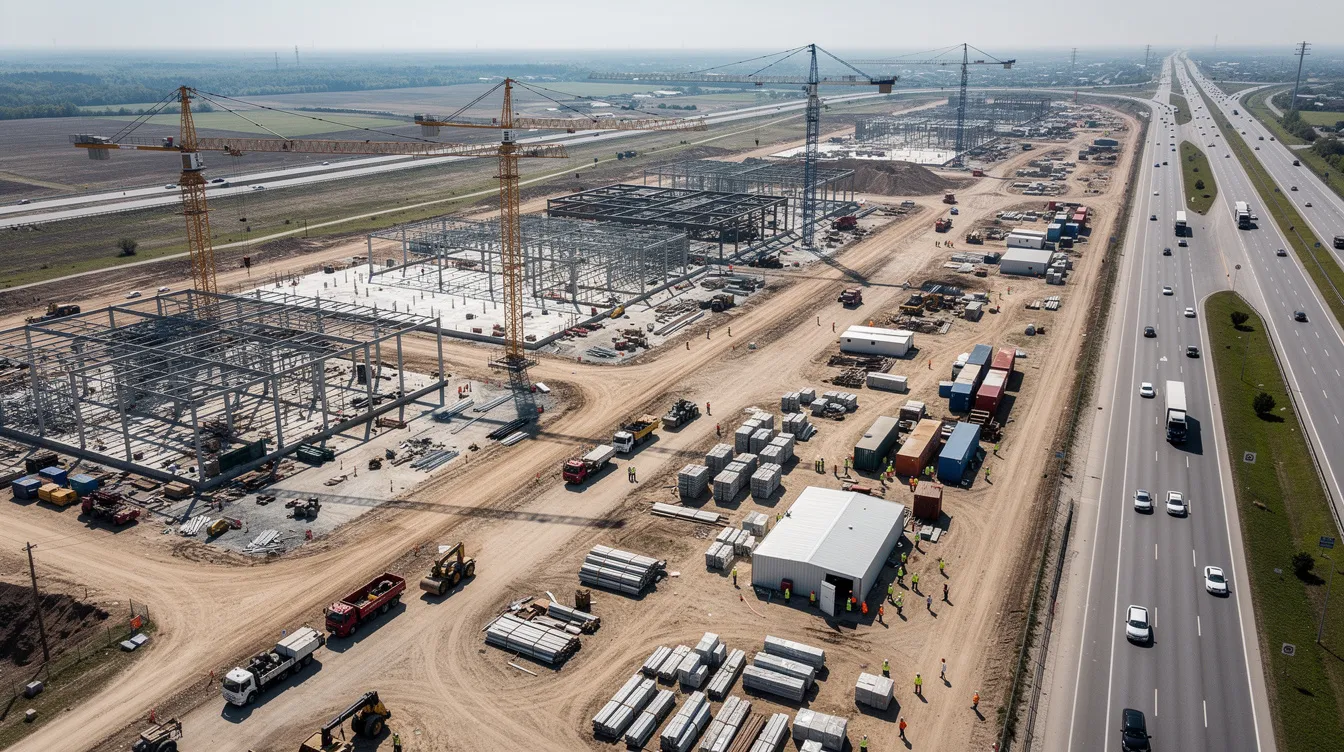
Field Reality Check: What South Texas Contractors Are Likely to See Onsite
Statewide unemployment figures tell one story. The day-to-day reality on jobsites across San Antonio and South Texas may tell a more urgent one. Here is what contractors are likely seeing:
- Longer time to fill open positions, especially for experienced craft professionals
- More poaching attempts from competitors willing to pay premium wages
- Higher wage expectations from journey-level workers who know their value in this market
- Many skilled construction workers are aged 55 or older, meaning retirements are thinning experienced ranks in real time
The roles that become bottlenecks first in a tight labor market include working foremen, lead electricians, experienced pipefitters, HVAC technicians, heavy-equipment operators working at height, and safety-critical positions like crane operators.
Practical consequences appear quickly on jobsites: supervisors carry larger spans of control, crews have more mixed experience, training happens on the fly, fatigue risk rises as teams rely on overtime to maintain schedules, and stronger jobsite organization becomes essential to keep work moving efficiently. Construction software improves jobsite efficiency and productivity, and mobile devices change how teams access current plans, share updates, and get answers in real time, but technology and tools cannot replace the judgment of experienced humans in the field.
Elevated overtime and less experienced workers on complex tasks can threaten STEP-level safety performance if contractors do not adjust planning and supervision. Compare these patterns with what you see in San Antonio, New Braunfels, Seguin, or other corridor markets. Treat the BLS data as confirmation, not a surprise.
Skilled Workers Versus Entry-Level Labor: Different Pressures, Different Risks
Not all labor scarcity carries the same risk. General construction laborers and entry-level workers may still be somewhat available, but the construction industry’s skills gap is growing, making it difficult for employers to find qualified workers in licensed or certified trades.
Over 20% of construction workers are aged 55 and older, and retiring experienced workers create a brain drain that cannot be replaced overnight. When industry leaders lose a foreman with 25 years of field knowledge, that loss ripples across every project that person touched.
Entry-level pressure:
- New workers are available but require supervision, mentoring, and structured onboarding
- There is a misconception about construction being low-tech or dangerous, deterring younger job seekers from pursuing construction jobs
- Attracting the next generation requires employers to invest in pay, benefits, and career pathways that make the industry competitive with other career paths
Skilled-trade pressure:
- Journey-level shortages in electrical, mechanical, and pipefitting trades are the real bottleneck
- Backfilling skill gaps with extra helpers or temporary labor introduces rework, safety incidents, and reduced productivity
- 80% of construction companies struggle to find qualified workers for these critical roles
Investment in workforce development is essential to address labor shortages. Labor shortages in construction are partly driven by inadequate training and workforce development programs that fail to build a pipeline of job-ready craft workers. Apprenticeships typically last four to five years, and participants earn while they learn, making them one of the most effective solutions for growing internal skill pipelines. Labor and management jointly cover apprenticeship costs, and many firms are expanding training opportunities for apprentices. However, a large percentage of apprentices do not complete the first year, which means retention and support during early training matter as much as enrollment.
ABC South Texas offers apprenticeship and craft education resources designed to help contractors develop skilled workers. Verify current program offerings, trades, and enrollment details with the chapter before planning around specific training schedules.

From Data to Decisions: A 30-Day Bid and Manpower Review Plan
September’s construction backlog labor shortage data should trigger a structured internal review. Here is a checklist that executives, estimators, and project managers can complete within 30 days:
- Map current and projected crews against your awarded backlog by trade. Identify where you have coverage and where gaps exist.
- Identify where supervision is stretched thin across multiple jobs. List every foreman or superintendent assigned to more than one active project.
- Flag upcoming bids that assume crew expansion or overlapping peak labor periods. Send these to your operations team for a reality check before final pricing.
- Revisit schedule commitments and manpower curves on your three to five largest active projects. Focus on foreman coverage and specialty-trade availability.
- Meet jointly with estimating, operations, and HR or workforce leads. Reconcile bid plans with realistic hiring and retention expectations, including current wage pressures in South Texas markets.
- Document specific actions such as declining certain invitations to bid, renegotiating milestone dates, or adjusting subcontractor scopes where demand exceeds available labor.
This is not a passive exercise. Firms that find and address mismatches now will protect margins when work accelerates.
Strengthening Supervision and Crew Planning Under Labor Constraints
With low unemployment and heavy backlogs, the limiting factor is often not headcount but effective supervision and thoughtful crew composition. Here is how to plan around limited foremen and superintendents:
- Prioritize assigning your strongest supervisors. Your best leaders belong on your highest-risk projects.
- Avoid splitting key leaders across too many jobs. Span of control matters more in a tight market.
- Use assistant foremen to expand coverage carefully, and invest time in developing them as the next generation of field leaders.
- Build standard crew “templates” by trade and project type that assume realistic productivity, not optimistic assumptions based on ideal conditions.
- Hold short weekly look-ahead meetings with field leaders and project managers to update manpower assignments as conditions change. These meetings should take no more than 30 minutes and should assist in identifying schedule conflicts before they become emergencies.
ABC South Texas’ leadership and safety training resources can help field leaders manage productivity and risk when crews are younger or less experienced. Verify the most current programs before referencing specific courses.
Coordinating With Subcontractors and Trade Partners When Everyone Is Stretched
Low construction unemployment affects not only general contractors but also key subcontractors, suppliers, and specialty service providers across South Texas. Every firm in the supply chain faces the same labor constraints.
Practical guidance for project managers and negotiators:
- Have early, candid conversations with trade partners about realistic manpower capacity, preferred sequencing, and blackout dates before finalizing schedules or committing to aggressive milestones with owners
- Build contingency into trade buy-out plans by identifying secondary subcontractors for critical scopes or structuring contracts that allow limited resequencing without full renegotiation
- Use prequalification and past-performance reviews that factor in manpower reliability and supervision depth, not just price, particularly for schedule-sensitive work
- Recognize labor pipeline realities: 40% of Texas construction workers were immigrants in 2022, and post-pandemic shifts have slowed the influx of immigrant labor into the construction sector. Dallas-Fort Worth faces a 30% labor shortage partly due to immigration enforcement by agencies including ICE, and similar pressures affect South Texas communities where immigrant workers have historically filled critical trade roles. These are real workforce dynamics, not political abstractions.
Companies that treat subcontractor coordination as a competitive advantage, not an administrative function, will outperform firms that simply chase the lowest bid.
Looking Beyond September: Indicators to Watch as You Manage 2027 Backlog
The September 2026 unemployment release is one data point. South Texas contractors should monitor these additional indicators as they plan 2027 staffing and bid strategy:
- Future BLS state unemployment releases: Track whether Texas holds near 4.4% or shifts meaningfully
- ABC National’s backlog and confidence index: Watch for changes in the national construction backlog average (currently around 8.7 months) and whether contractor sentiment shifts
- Internal metrics: Track your own turnover rates, vacancy duration for journey-level positions, and time from bid award to full crew mobilization
Pair unemployment data with your own South Texas backlog and market outlook. Review available ABC South Texas content on commercial construction staffing trends, record-low labor churn in construction, and the broader Texas construction labor shortage to round out your understanding.
Formalize this monitoring by adding a brief economic review to quarterly leadership meetings or assigning a staff member to track ABC and BLS releases relevant to Texas. The past year’s data tells a clear story: labor remains tight, and contractors who build that assumption into their planning will make better decisions.
How ABC South Texas Can Support Your Next Steps
Construction unemployment below 10% in every state and a 4.4% Texas unemployment rate confirm that the workforce shortage will remain the defining constraint as South Texas contractors work through strong backlogs. This is not a temporary condition. It is the operating environment for late 2026 and into 2027.
Your concrete next step: schedule an internal 30-day manpower and bid-risk review using the checklist above, then connect with ABC South Texas for workforce development, apprenticeship, or leadership training options that address the gaps you identify. The chapter offers apprenticeship, safety, and leadership resources designed to help contractors attract, develop, and retain skilled workers and strengthen supervision capacity over time. Verify current programs, trades, and enrollment details directly with the chapter.
Visit ABC South Texas’ website or contact the membership team to discuss how to align your backlog, labor strategy, and safety priorities with the labor market realities that September’s data makes impossible to ignore.


