


Introduction: Why the Construction Industry Hiring Outlook in Texas Matters Now
The construction hiring outlook for Texas contractors remains tight as South Texas teams plan work for late 2026 and into 2027. September labor data from the Bureau of Labor Statistics and ABC National’s state construction unemployment analysis show the labor pool is not loosening. Demand remains strong, but skilled workers remain in short supply, continuing to pressure staffing, bids, and schedules.
This article is a market brief, not a high-level academic summary. It translates September’s state and national construction unemployment signals into specific decisions San Antonio and South Texas construction companies should make over the next 30 to 90 days. Whether you are an owner, estimator, project manager, or superintendent, the data point toward immediate action on hiring, retention, wage assumptions, and project selection.
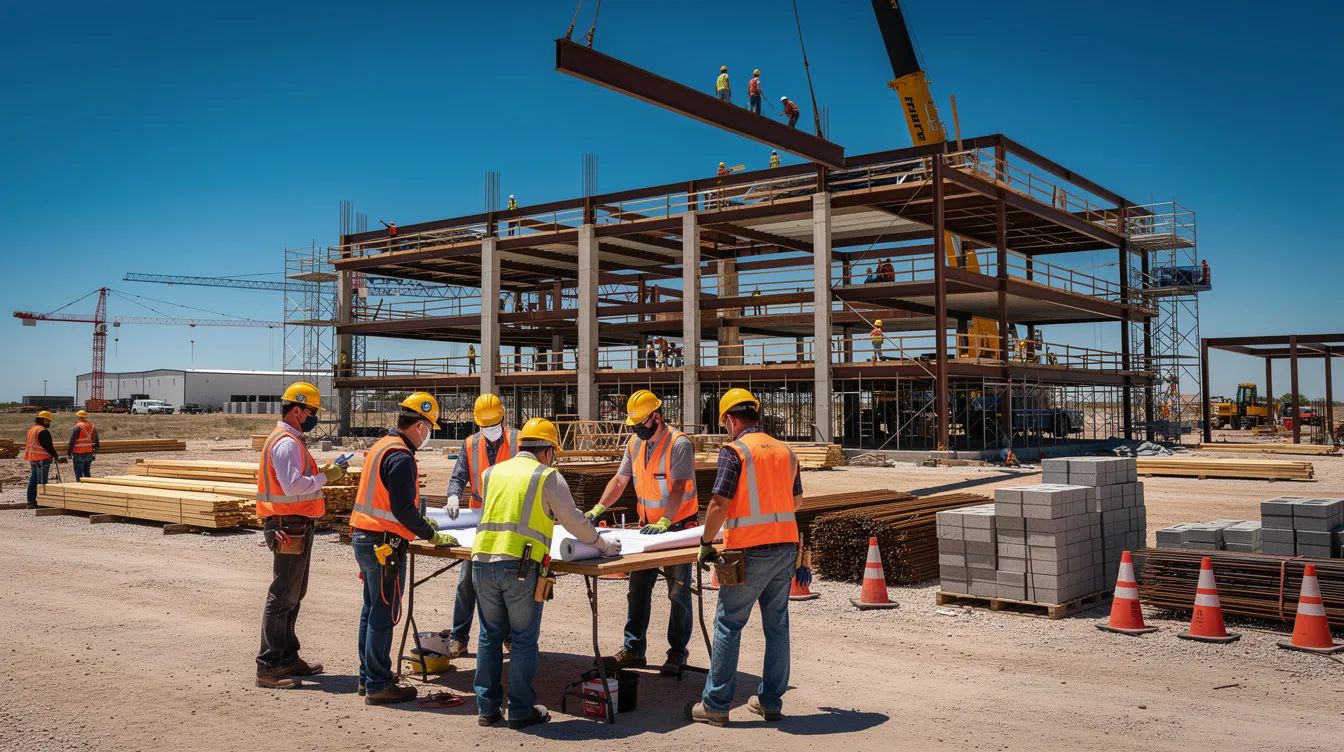
September 2026 Labor Snapshot: Where Texas Stands
In September 2026, Texas posted a seasonally adjusted overall unemployment rate of approximately 4.4%, according to BLS state employment data. That figure placed Texas roughly 37th among the 50 states, meaning most other state economies had lower unemployment. While 4.4% is not historically alarming, it represents a slight increase from September 2025’s 4.3%, and it sits within a broader context: BLS reported that the largest job gains in the country occurred in Texas. Texas construction employment stands above 921,700 jobs, and Texas construction hiring is driven by infrastructure and industrial investments. The state also has significant ongoing investments in renewable energy and traditional infrastructure projects, keeping demand for construction labor elevated.
ABC National’s September construction unemployment analysis found that every state in America had a construction unemployment rate below 10%. Earlier in the year, ABC’s August data pegged construction industry unemployment nationally at about 3.1%; the September figure moved modestly higher to around 3.5%, but it remains remarkably low. This is not a signal that slack labor is waiting on the sideline. It is confirmation that the nationwide construction labor pool is tight in every region of the nation’s market.
For South Texas contractors who already reviewed August data through ABC South Texas’ commercial construction staffing analysis, September’s numbers reinforce the same story. The tight labor conditions that started the year have not eased heading into October. If anything, the September snapshot adds urgency for firms that expected relief.
What Low Construction Unemployment Really Means on the Ground
Low construction unemployment sounds like a positive headline, but for a general contractor or specialty trade firm trying to staff a project in TX, it creates a very different reality. It means the person you need to hire is already working for someone else. Fill times are longer. The applicant pool for any given position is thinner. Resources to meet construction demand are limited.
Wages are rising in Texas construction due to labor shortages, and, in addition to a thinner labor pool, Texas construction firms are raising pay rates to compete for skilled labor. When a competing firm calls your electrician or superintendent with a premium offer, counteroffers begin. Poaching mid-project is no longer unusual. Project executives must build this expected risk into their planning. Specialized recruiters are increasingly used to fill high-demand construction roles because traditional job postings no longer generate the response they once did. That help comes at a cost and adds time to the hiring cycle.
Over 90% of Texas construction firms struggle to find qualified workers, a figure that should give every South Texas team pause. The Texas construction industry faces a projected shortage of over 300,000 workers, and that gap does not close on its own. When your company wins work and cannot staff it in a timely manner, the downstream effects are real: delayed mobilization, overtime for existing crews, subcontractor markups, and erosion of the margin you expected when you submitted the bid.
Low unemployment also eliminates the “slack” capacity that used to absorb surge work. If two or three projects ramp up at the same time, there is no deep bench of available craft labor to call. The day your schedule demands more people than your area can supply is the day your cost assumptions break.
South Texas Focus: San Antonio and the I‑35/I‑10 Corridors
San Antonio’s unprecedented construction boom has created constant demand for skilled construction workers. Commercial, industrial, healthcare, logistics, military-adjacent, and infrastructure projects are all active across the area, and construction job growth in Texas is concentrated in major metropolitan areas like San Antonio, Austin, Dallas, and Houston. Houston alone added over 13,800 construction jobs in a single year, illustrating the scale of competition for labor across the state. Data centers and technological infrastructure are major drivers of construction demand in Texas, pulling electricians, pipefitters, and sheet metal workers toward projects with deeper pockets and longer timelines.
The practical result for San Antonio contractors is that you are not only competing locally. Large state and national firms pursuing industrial and data center work along the I-35 and I-10 corridors are drawing from the same workforce. A plumber who started on a school project in Bexar County may end up on a data center job 90 miles away if the pay is right. A superintendent you rely on may get assigned to a national firm’s high-profile infrastructure build because that company can offer higher compensation and a broader career view.
Because county-level construction unemployment data is not publicly available, South Texas contractors must rely on observable conditions to gauge the local market. Time to fill openings has increased. Contractors are leaning more heavily on referrals and trusted subcontractor relationships. Some projects have already seen schedule compression or delayed starts. These signals matter when you cannot point to a single number for your area.

Where Hiring Pressure Hits First: Critical Roles and Trades
Field supervision is often the first area where tight labor conditions create problems. Foremen and superintendents are essential to construction management on every jobsite. When these positions go unfilled or are spread across multiple construction projects, decision-making slows, details get missed in submittals and RFIs, and safety exposure increases. A superintendent who is assigned to cover two or three sites cannot give any of them the attention to detail they require.
Construction management professionals such as project managers and estimators are similarly strained. These roles coordinate workers, materials, schedules, and quality. When a team is short a project manager, the remaining staff absorbs the workload, and mistakes in pricing, sequencing, or communication increase. For mid-sized construction companies in San Antonio, competing with larger firms for this expertise is especially difficult because the bigger organizations can often offer higher salaries and a wider range of future opportunities, even if the mid-sized firm offers greater flexibility and broader responsibilities.
Demand for electricians, plumbers, and skilled trades is high in Texas, and these licensed roles require multi-year training or certification, so the supply pipeline responds slowly to surges. Nationally, staffing firms like Tradesmen International have over 150,000 skilled craftworkers available, and that workforce includes multiple trades, with safety training mandatory for all Tradesmen International craftworkers. But even with over 150,000 skilled craftworkers available nationwide through such firms, the local competition for those workers remains fierce, especially when industrial and data center projects can pay a premium.
Inspectors and quality control personnel also remain in demand. Safety standards are not optional, and owner expectations around risk management remain high. When inspection capacity is thin, project timelines slip, and momentum on a jobsite diminishes.
Implications for Bids, Pricing, and Schedule Risk
September’s labor data should prompt every estimator and project executive in South Texas to revisit the assumptions behind active and upcoming bids. If your estimate assumes you can mobilize a full electrical crew within two weeks, or that a superintendent will be available on your start date, the current market may not support that assumption. The hiring landscape in Texas is impacted by economic factors like high interest rates, which add cost pressure on top of already constrained labor supply.
Estimators should build in realistic start dates that account for 30 to 45 days of hiring lead time for critical positions. Factor premium pay or retention incentives for key hires into the bid, not as an afterthought. Stacking too many projects that draw on the same skillset at the same time is a recipe for resource conflicts and cost overruns. And aggressive schedule compressions, where a contractor promises to build faster to win work, carry even more risk when the labor to deliver that speed simply does not exist.
Profit fade risk is elevated in this environment. When labor availability falls short of what was estimated, the gap gets filled with overtime (which costs more per hour), with subcontractors (who may charge a premium), or with schedule delays that trigger penalties. Construction companies must navigate complex regulations and compliance requirements on top of these pressures, and safety standards are critical for compliance in construction projects, adding another layer of execution risk when field leadership is thin.
Treat the September state unemployment rate and ABC’s construction unemployment data as a stress test for your bid pipeline. If any active bid or pending award relies on easy access to craft labor or field leaders, that bid deserves a second look before you commit.
30‑Day Action Plan: Resetting Construction Management Manpower and Hiring Strategy
September’s data give South Texas contractors a concrete reason to act now, not next quarter. Here are the steps your team should take over the next 30 days to reset your manpower and hiring strategy.
Refresh your 30-, 60-, and 90-day manpower forecast. Match every project that is starting or ramping up in late 2026 and early 2027 to a realistic view of how long it will take to hire the critical roles you need. Don’t assume the people you need are waiting.
Review all open positions and update your time-to-fill assumptions. Pull data from your most recent hires to understand how long it actually took to bring on electricians, plumbers, superintendents, and project managers. Use those numbers, not wishful thinking, to plan your schedules.
Benchmark wages, benefits, and incentives for critical roles in your area. Understand what competing firms, especially those working on industrial and data center projects along the I-35 and I-10 corridors, are offering. If you are not in the compensation conversation, you are not in the talent conversation.
Align pending bids with your true staffing capacity. Do not bid more work than you can staff. Identify which projects would face delays or penalties if hiring slips by 30 to 45 days, and use that information to calibrate your markups and risk premiums.
Compliance can be a time-consuming process for construction companies, so staying compliant with safety, licensing, and regulatory requirements helps reduce administrative burdens for construction firms and protects your ability to perform efficiently when resources are stretched.
Ensure that this process involves collaboration between owners, executives, HR, field leadership, and estimating. The people closest to the work, your foremen, your superintendents, and your project managers, know where the gaps are. Ground your manpower plan in their experience, not just a spreadsheet.
Balancing Hiring, Retention, and Crew Well‑Being
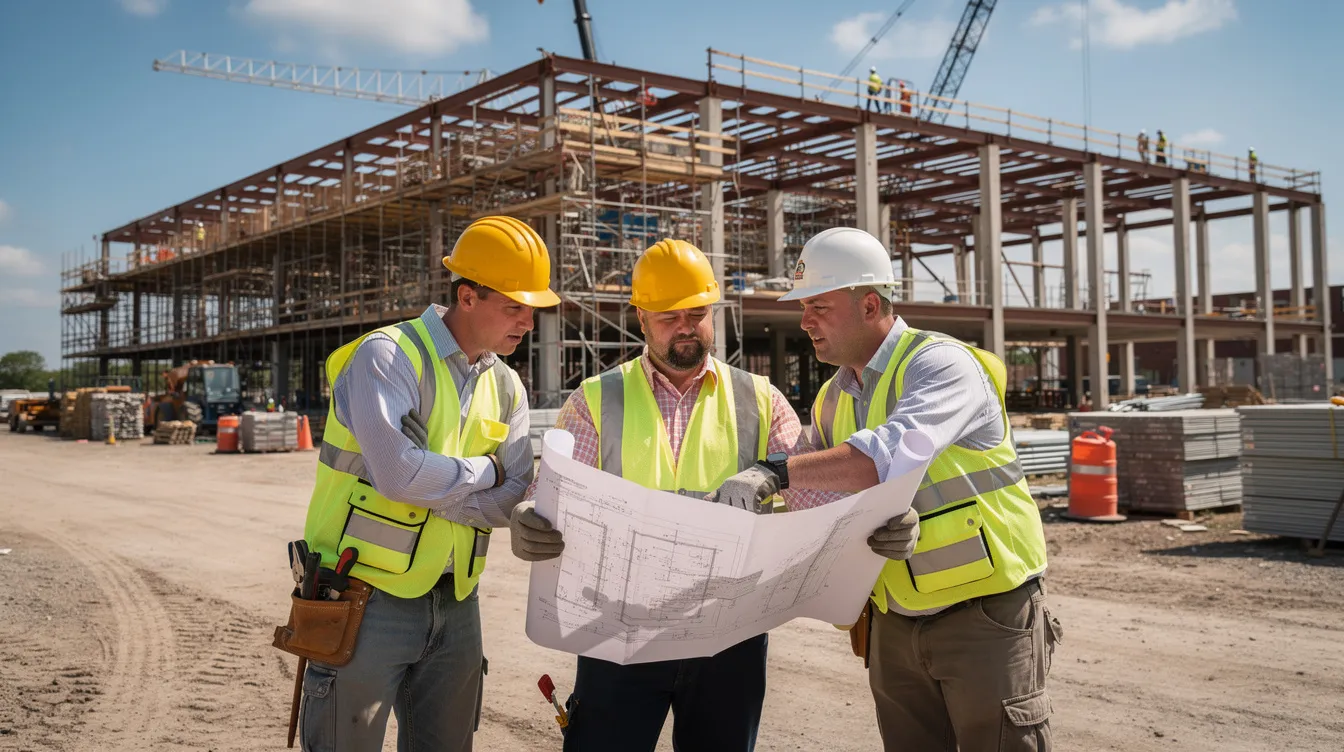
In a low-unemployment construction industry, keeping the people you already have is often the highest-return investment a company can make. Every person who leaves mid-project creates a hole that is expensive and time-consuming to fill. Retention isn’t a secondary concern; it is central to your ability to deliver work, maintain safety, and build pride in your company’s reputation.
Clear advancement paths matter. When a helper sees a path to becoming a journey-level electrician or plumber through apprenticeship and craft training, they’re more likely to stay and keep growing with your team. ABC South Texas supports apprenticeship and craft education programs, and the Contractors Apprenticeship Trust trains in carpentry and plumbing, among other trades. These pathways convert general labor into the skilled trades your projects need.
Tight labor conditions increase the risk of burnout, safety incidents, and turnover, especially in South Texas where heat exposure and physical strain are a daily reality. Contractors who care about their people integrate safety, wellness, and workload management into their workforce strategy. Recognizing foremen and key craftworkers with both fair compensation and visible respect goes a long way. A family-oriented, safety-first culture isn’t just a nice-to-have; it is a competitive advantage when everyone on your crew has options.
How ABC South Texas Can Support Your Workforce Strategy
ABC South Texas is a nonprofit construction trade association serving commercial and industrial contractors across San Antonio and the broader South Texas footprint. The chapter’s focus is on workforce development, apprenticeship, safety education, and leadership training, all of which become more important when the external hiring market is tight.
Chapter apprenticeship programs in trades such as Carpentry, Electrical, Pipefitting, Plumbing, and Sheet Metal can help expand a contractor’s local talent pool. These NCCER-accredited programs create a pipeline of trained craftworkers who are ready to add value on the jobsite, reducing your dependence on a labor market where great candidates are hard to find.
Safety and leadership offerings, including OSHA training, foreman development, and field leadership programs, improve retention and productivity when adding headcount is difficult. Investing in the people you have, through tools like structured training and career development, builds long-term success rather than chasing short-term hires. Contractors who want to explore how membership, apprenticeship pathways, and workforce planning resources fit their specific needs should connect with ABC South Texas staff to start the conversation.
Bottom Line: Reading the September Signal and Planning Ahead
September’s construction unemployment data confirm that Texas, including San Antonio and South Texas, is still operating in a tight labor market. With state unemployment at about 4.4% and construction unemployment nationally below 10% in every state, the hiring challenges that have defined this year show no sign of ending. Commitment to planning will separate contractors who protect their margins from those who watch them erode.
The construction hiring outlook in Texas should prompt immediate action, not complacency. Review your manpower forecasts. Stress-test your bid assumptions. Benchmark your wages. Identify your exposure. These are not tasks for next quarter; they are tasks for the next two weeks.
Schedule a brief internal workforce review with your executive team, HR, and field leadership. Then contact ABC South Texas to learn how apprenticeship, safety training, and workforce-planning resources can support your hiring and retention strategy heading into 2027. The market is not waiting, and neither should you.


