


South Texas contractors face a simple reality every summer: high temperatures, dispersed crews, and tight schedules create heat risk that no single device can solve. Construction safety wearables are gaining traction as a way to monitor vital signs and environmental conditions in real time, but the technology only delivers results when it sits inside a disciplined, enforceable heat-illness prevention system.
Key Takeaways
Construction safety wearables can reduce heat-related illnesses on South Texas construction sites, but only when embedded in a full heat-illness prevention system that includes water, rest, shade, acclimatization, supervision, and emergency response.
- Wearable technology enhances construction site safety through proactive monitoring, providing real-time data and real-time alerts that help supervisors intervene before heat strain becomes a medical emergency.
- Wearable devices do not replace hydration, rest breaks, shade, acclimatization protocols, or active field leadership. They are one layer in a broader system.
- OSHA currently treats physiologic monitoring as a helpful tool, not a stand-alone control. South Texas contractors must still follow core guidance for heat stress in construction, including written plans and training.
- ABC South Texas can help members evaluate, pilot, and integrate construction safety wearables alongside existing safety training and the step safety management system to build repeatable, scalable heat protection across the 22-county region.
Why Heat Stress and Wearables Matter Now on South Texas Construction Sites
August and September along the I-35 and I-10 corridors bring triple-digit ambient temperature readings, relative humidity that slows evaporative cooling, and long shifts on concrete, steel, and rooftop surfaces that radiate excess heat back at crews. These are not abstract risks. Heat stress caused 999 fatalities from 1992 to 2021 across U.S. workplaces, and construction accounts for 38 percent of heat-related deaths in the country. Heat waves in San Antonio and across the 22-county footprint compound the danger with limited air movement, heavy PPE, and crews that may not yet be acclimatized at the start of the season.
Heat stress is the sum of environmental heat and metabolic load minus the body’s ability to cool itself. When the body’s response cannot keep pace, heat strain builds, leading to heat exhaustion, heat stroke, or fatal heat illness. South Texas job sites face many factors that elevate this risk: direct sun, radiant heat from materials, limited shade, and physically demanding tasks like steel erection, paving, and heavy lifting.
Construction safety wearables have emerged as a way to monitor workers’ physiological strain and detect environmental hazards in real time, but they are an enhancement to, not a substitute for, written heat plans and basic controls. Merit shop contractors who use technology to keep crews healthy, reliable, and productive through the entire season build a competitive advantage that translates to stronger bids, better retention, and safer projects.
What Construction Safety Wearables Can – and Can’t – Tell You About Heat Risk
In this context, construction safety wearables include biometric armbands, connected vests, in-ear sensors, smart helmets, smart clothing, and environmental sensor modules. These devices monitor worker physiology and surrounding conditions across construction sites. Here is how wearable technology maps to common heat stress monitoring capabilities:
| Device Type | What It Measures | Additional Capabilities |
|---|---|---|
| Biometric armbands/patches | Heart rate, skin temperature, sweat rate, heart rate variability | Wearable hydration patches measure sweat loss and skin temperature; fatigue monitoring sensors can flag dehydration and exhaustion from heat stress |
| Connected vests | Provide real-time data on physiological indicators including body temperature and motion | Environmental sensor wearables alert workers to hazardous air quality or excessive heat; wearables can detect toxic gases and hazardous airborne particles in real time |
| Smart helmets/hard hats | Monitor vital signs and detect environmental hazards; smart hard hats detect impacts through embedded gyroscopes and sensors | Smart helmets can detect falls and alert supervisors automatically; smart helmets can detect falls and call for help automatically; built-in fall detection sensors can reduce emergency response times during incidents |
| Smart glasses | Enable hands-free access to project plans and instructions | Augmented reality glasses can minimize distractions by displaying safety guidelines |
| Smart boots | Track worker stability and detect slips or trips | Wearable proximity sensors detect nearby vehicles and heavy machinery for safety |
| GPS/location modules | Worker location for dispersed crews | GPS-enabled wearables improve response times during emergencies by locating workers quickly; “man-down” alarms provide critical support for lone workers in isolated conditions |
Biometric sensors track core body temperature and heart rate in real time, and wearable technology can monitor core body temperature across hot environments, giving supervisors actionable data. Wearable devices provide real-time monitoring of workers’ vital signs and can measure sweat loss and skin temperature to help assess hydration status. WBGT remains the most accurate way to gauge environmental heat risk on active outdoor sites, but wearables supplement it with individual physiologic data that heat index alone cannot capture.
Real-time alerts from wearables prevent heat-related illnesses by escalating warnings as workers approach preset strain thresholds, triggering automatic work/rest prompts and pushing crew status to supervisor dashboards spanning multiple job sites.
What wearables cannot do: They do not diagnose heat-related illness. They cannot fully account for medications, underlying conditions, or other factors that affect individual tolerance. If devices are not worn correctly, charged, or connected, they produce gaps. If supervisors or project managers treat wearable tech as “proof of safety” instead of one layer in a broader system, they risk missing early symptoms that field observation and worker reports would catch.
OSHA’s Current View: Physiologic Monitoring as a Tool, Not a Silver Bullet
As of 2026, OSHA has not finalized a federal heat standard. The proposed rule remains in rulemaking, and enforcement relies on the General Duty Clause and the National Emphasis Program updated in April 2026. OSHA’s guidance references physiologic monitoring, including heart rate and body temperature tracking, as one method to assess heat strain, but the agency continues to prioritize fundamental controls: water, rest, shade, acclimatization, engineering controls, and training.
Safety wearables provide real-time hazard alerts and monitor worker health vitals, which can help document exposure and response, support investigations, and demonstrate good-faith efforts toward occupational safety. However, no monitoring device justifies ignoring basic prevention steps.
For South Texas contractors working on federal, military-adjacent, or industrial projects, careful documentation of heat stress monitoring and response can reduce regulatory risk, but only when the written plan and field execution match the data. This article is informational and not legal advice. Members should coordinate with counsel or their safety consultant for project-specific compliance questions.
Building a Heat-Illness Prevention System Around – Not Behind – Wearables
This is the operational core. South Texas contractors should build a system that integrates construction safety wearables into existing heat plans, STEP processes, and on-site supervision rather than bolting devices onto an incomplete program.
Key system components:
- Written heat stress procedures with clear safety protocols and trigger points
- Acclimatization schedules for new and returning workers (7 to 14 days, ramped workload)
- Hydration and ice logistics, including accessible water stations and electrolyte supply
- Work/rest cycles based on heat index or WBGT, adjusted for hot conditions and PPE load
- Shaded or cooled recovery areas (portable shade, misting fans, or air conditioning in trailers)
- Emergency response steps: who calls 911, who starts first aid, where is the nearest cooling station
Wearable devices can alert workers to rehydrate or rest, and wearables can transform passive PPE into active, data-driven safety mechanisms. When an alert fires, the system defines who receives it (foremen, safety managers), how they escalate (radio call, stop-work authority), and how decisions about rest, shade, and medical evaluation are documented.
Supervisor accountability is non-negotiable. Expectations should include daily heat briefings, buddy checks, and documented follow-up whenever an alert triggers. Wearables support active leadership on construction sites; they never replace it. Continuous data from wearables can help safety managers redesign safety protocols over time, creating a cycle of improvement rather than a one-time gadget purchase.
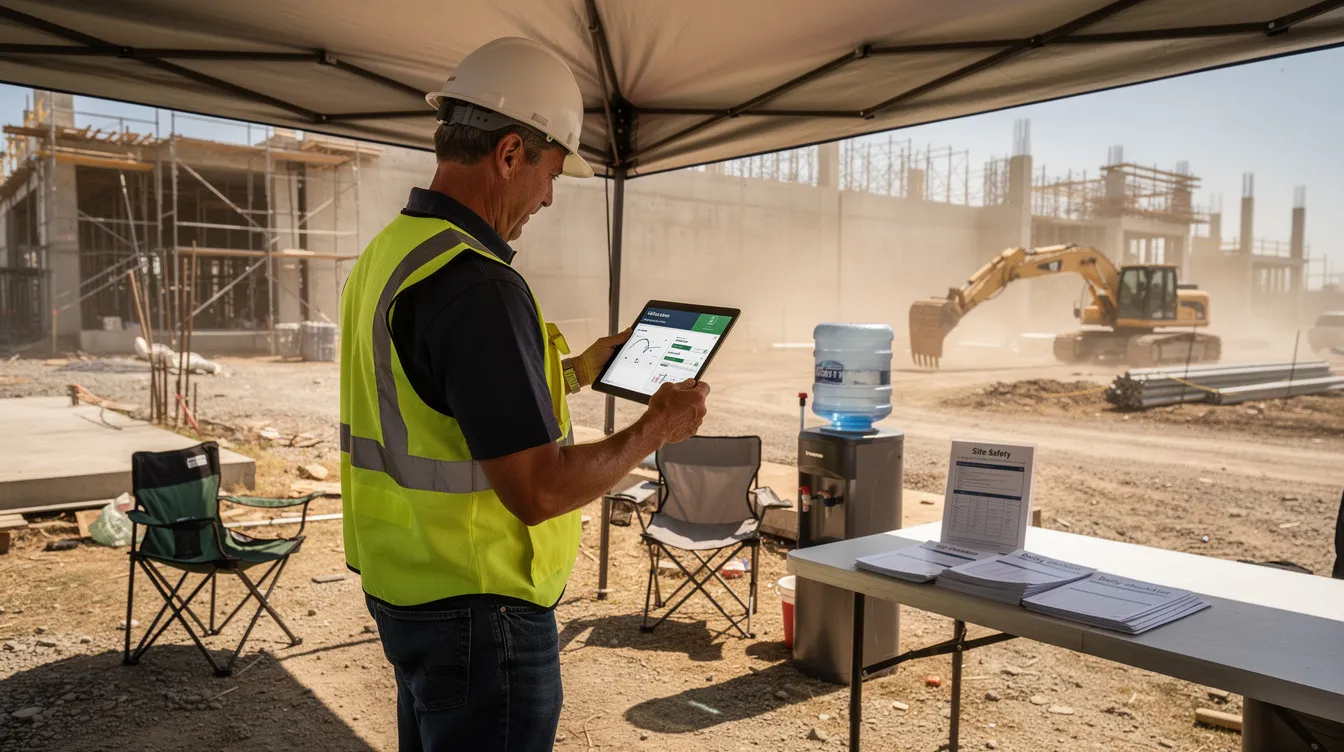
Designing a Real-World Wearable Pilot on South Texas Job Sites
Before scaling to the full company, start with a 60-to-90-day pilot on a specific South Texas project, such as a commercial build in Bexar County or highway work along the I-10 corridor.
Selection criteria for construction safety wearables:
- Device form factor that fits the work (armband, vest, in-ear) without interfering with PPE
- Battery life covering 10-to-12-hour shifts in high temperatures
- Durability against dust, sweat, impact, and humidity
- Simple interface for field crews, including bilingual visual or auditory cues
- Compatibility with existing construction site safety technology and communication tools
- Clear data ownership and vendor cybersecurity policies
Pilot steps:
- Choose one crew or phase with high heat exposure (roofing, paving, steel erection).
- Train workers and supervisors on what the device does, what alerts mean, and what response is expected.
- Define clear heat stress monitoring thresholds and safe thresholds aligned with WBGT or heart rate ceilings.
- Pre-plan responses: immediate alerts trigger shade, hydration, and supervisor check-in.
- Establish baseline metrics: near misses, self-reported heat symptoms, absenteeism, overall productivity impacts.
To avoid alarm fatigue, use tiered alert levels, review false positives daily, and adjust thresholds to realistic South Texas conditions. Align alerts with existing work/rest schedules instead of constant interruptions. Bodytrak detected over 1,000 heat stress cases in 2024, demonstrating that real-world deployments generate meaningful volume, and that alert management must be designed from day one.
Run regular check-ins with field leadership, safety staff, and workers to collect feedback on comfort, trust, and usefulness. Fold learnings into the broader tech-adoption approach described in the AI Safety Technology Construction 2026 Playbook.
Privacy, Trust, and Bilingual Communication on Diverse Crews
No construction safety wearable program succeeds if craft professionals do not trust how data will be used. South Texas crews are often bilingual, tight-knit, and wary of surveillance dressed up as safety.
Core privacy topics contractors must address:
- What data is collected: physiological readings, environmental conditions, location
- Who owns it and how long it is stored
- Who can see individual results versus aggregated crew data
- Whether data feeds into discipline, productivity tracking, or only safety and wellness
Contractors should commit in writing that heat stress and heat-related illness data will not be used for hourly discipline or productivity pressure. Frame the program around worker safety, wellness, and long-term planning, tying it to broader construction wellness programs and retention goals. Wearable technology helps improve communication and reduces distractions on job sites when workers understand its purpose.
Bilingual communication matters at every step. Orientation, consent forms, toolbox talks, and alert explanations should be available in English and Spanish. Supervisors need training to explain how wearable technology works and what happens when an alert fires. Building trust may require small-group demos, early involvement of respected foremen and journey-level craft professionals, and transparency about vendor data-sharing practices. Encourage workers to ask questions and voice concerns, then act on that feedback visibly.
From Real-Time Data to Safer, More Productive Operations
Construction safety wearables become an operational tool when aggregated real-time data reveals patterns across multiple South Texas job sites. Data from wearables can reveal trends such as frequent near-misses on construction sites, times of day with repeated heat stress alerts, tasks or locations with persistent heat-related incidents, and crews that need adjusted acclimatization or extra rest breaks.
The business impacts for construction companies are concrete: fewer recordable heat-related illnesses, reduced workers’ compensation claims, lower overtime from replacements, steadier schedules, and less risk of serious injuries or fatalities that can shut down projects. Real-time alerts prevent heat-related illnesses in workers, and wearable technology reduces incident rates on construction sites when the data drives actual decisions. Wearable technology enhances worker safety by detecting environmental hazards before they cause physical strain or worse. Construction safety wearables enhance job site protection by preventing accidents and supporting proactive measures rather than reactive scrambles.
Wearable technology can reduce heat-related incidents on job sites, but only if someone owns the data review process. Assign the safety director or operations manager to regularly review wearable data, update the heat plan, and brief executives so that lessons from one project inform work across the I-35 and I-10 corridors. This analytics perspective connects to the broader theme: data-driven safety supports efficiency, bid competitiveness, and stable margins.
Common Rollout Mistakes South Texas Contractors Should Avoid
When construction companies rush into wearable tech during extreme-heat periods, predictable mistakes follow:
- Buying devices without updating the written heat plan. Wearables layered onto inconsistent water, rest, and shade practices produce data nobody acts on.
- Failing to train supervisors on alert response. If foremen do not know what to do when real-time alerts fire, the technology is decoration.
- Ignoring bilingual communication needs. Alerts, training, and consent that exist only in English exclude a significant portion of South Texas crews.
- Neglecting privacy. Undisclosed location tracking or physiologic monitoring erodes trust fast, especially among workers already skeptical of employer motives.
- Letting devices die. Charging, maintenance, and connectivity hassles cause devices to fall out of use within weeks if no one owns the logistics.
- No documented follow-up. An alert that fires without a recorded response is worse than no alert at all from a liability standpoint.
- Vendor-driven pilots disconnected from the safety system. Treat wearables as part of a staged improvement effort aligned with STEP commitments and the overall technology roadmap, not as a standalone vendor demo.
Correcting these mistakes early preserves worker trust, increases the chance of measurable ROI, and avoids the “we tried that once, and it didn’t work” trap that stalls future innovation. The numerous benefits of wearable tech only materialize when the system around them is solid.
Next Steps for ABC South Texas Members and Regional Contractors
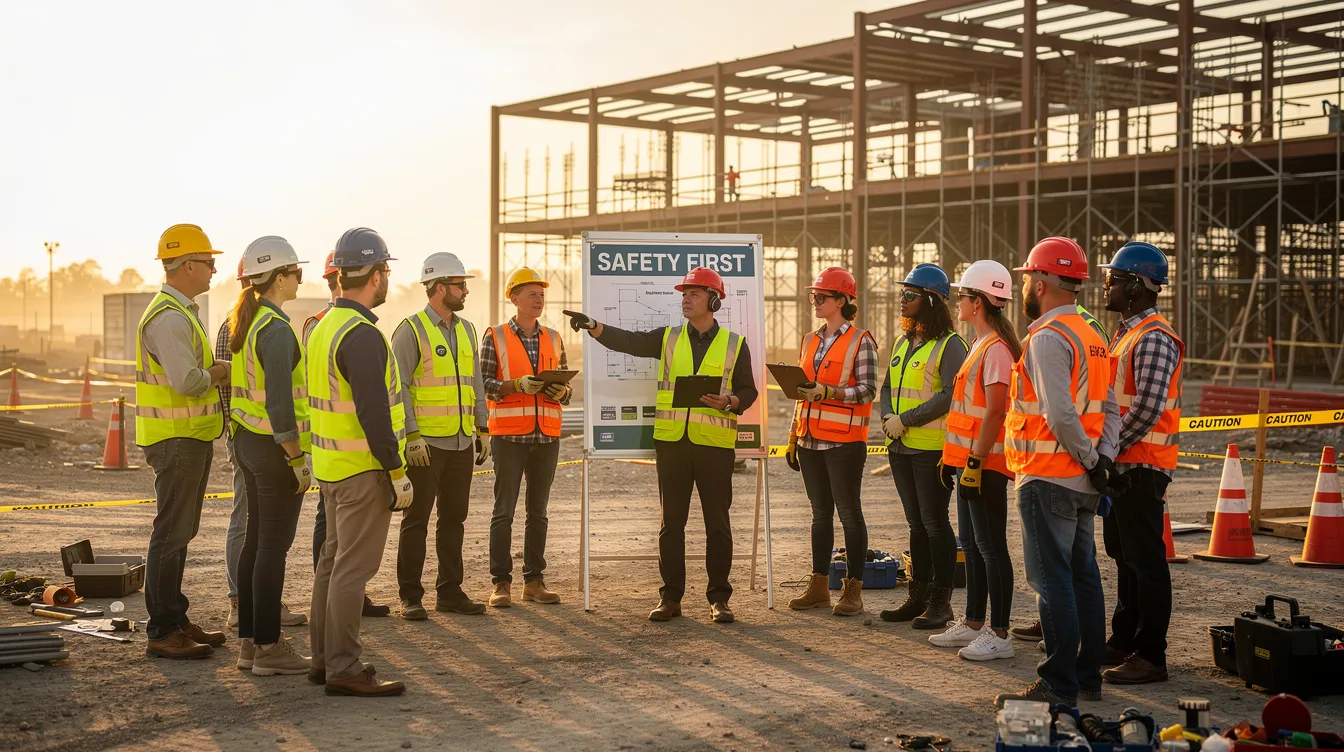
Start with the foundation. Revisit the existing heat plan and the ABC South Texas resource on heat stress in construction. Confirm that acclimatization, hydration, rest, shade, and emergency response protocols are current and enforced before layering on monitoring technology.
Then run a structured internal discussion. Bring together the safety director, key project managers, and foremen to review gaps that real-time data from construction safety wearables could fill: dispersed crews, night work, industrial facilities with radiant heat, or hot environments where traditional observation breaks down. Decide whether a pilot makes operational sense for the current season.
Tap ABC South Texas programs to support the effort. OSHA 10/30, heat illness toolbox training, STEP assessments, CPR and first aid certification, and relevant sessions on construction site safety technology provide the training backbone that wearable adoption requires. The chapter can help members vet vendors, design pilots, and connect wearable insights to the STEP safety management system.
Quick-start checklist:
- Audit the written heat plan against current OSHA guidance
- Identify the highest-risk crew, phase, or site for a 60-to-90-day wearable pilot
- Train supervisors in both English and Spanish on alert response and escalation
- Define data privacy commitments before deploying any device
- Schedule a mid-pilot review with field leadership and safety staff
Contact ABC South Texas to discuss pilot ideas, supervisor training, and how wearables can support broader construction wellness programs, construction ergonomics injuries prevention, and workforce retention across the 22-county region.
FAQ: Construction Safety Wearables and Heat Stress
These questions address practical concerns South Texas contractors raise when exploring construction safety wearables for heat stress monitoring. Each answer stands on its own and extends the guidance above.
Are construction safety wearables required by OSHA for heat stress prevention?
OSHA does not currently require construction safety wearables or any specific heat stress monitoring device. The agency expects employers to protect workers from heat-related illnesses using feasible controls and training. Physiologic monitoring is considered an optional tool that may support those efforts. OSHA’s enforcement framework relies on the General Duty Clause, the updated National Emphasis Program, and evidence that employers provide water, rest, shade, and acclimatization. However, some owners or general contractors on federal or industrial projects may specify additional monitoring requirements in contract documents. Contractors should always review project-specific language and coordinate with their safety consultant to understand what a particular work environment demands.
How much do construction safety wearables typically cost to pilot?
Costs vary by device type and vendor, but the framework includes per-worker hardware, monthly or annual software subscriptions, data connectivity infrastructure, charging and storage equipment, and training time for both supervisors and field crews. South Texas contractors should start by estimating the cost of equipping one crew or one critical task, then compare that figure to the potential cost of a serious heat-related illness, work stoppage, OSHA citation, or workers’ compensation claim. Total program cost includes supervisor time to respond to alerts and document actions, not just the device price. Evaluating ROI requires looking at reduced heat-related incidents, lower absenteeism, and steadier productivity rather than hardware alone.
Can wearable heat monitoring data be used to improve future project planning?
Yes. Data on peak heat stress times, alert frequency by location, and task-specific heat risk patterns can inform schedule shifts such as earlier starts or night pours, crew rotations, and cooling investments on future projects across South Texas. Aggregated, de-identified data helps safety and operations teams refine work/rest guidelines, adjust staffing levels during extreme heat, and better budget for controls like shade structures, fans, and water trucks in project plans. Continuous data from wearables can help safety managers redesign safety protocols and reduce heat risks over successive seasons. Periodic reviews of historical wearable data alongside incident reports support a continuous-improvement process, particularly for firms doing repeat work along the I-35 and I-10 corridors.
How do construction safety wearables support total human health, not just heat safety?
Many devices track broader indicators such as heart rate variability, fatigue signals, and movement patterns that relate to stress, sleep quality, and ergonomic strain. Wearable exoskeletons can lower risks of musculoskeletal injuries from repetitive tasks, and exoskeletons help reduce muscle strain during lifting or overhead activities. These capabilities extend the value of wearable tech beyond heat stress into overall worker health. Construction wellness programs and construction ergonomics injury prevention efforts benefit when wearables provide early warning signs that a worker is struggling before it shows up as an injury or absence. Contractors should treat wearable insights as one input into supportive conversations about workload, rest, and mental health rather than a surveillance tool or basis for discipline, reinforcing the trust that makes the entire system work.


