


Construction wellness programs in South Texas cannot stop at a poster in the break trailer or a hotline number buried in an onboarding packet. OSHA’s construction suicide-prevention page states that the suicide rate for construction workers is four times higher than in the general population. That is why this topic belongs in day-to-day jobsite leadership, not just HR files or an annual awareness campaign. For contractors working across San Antonio and the broader South Texas market, the practical question is simple: what should leaders actually do on Monday morning?
This article gives owners, project managers, safety directors, superintendents, and foremen a field-ready framework. The focus is not clinical diagnosis. It is leadership behavior, escalation clarity, and a repeatable response that helps crews connect with support before a crisis becomes an emergency.
Key Takeaways
- Construction wellness programs are most useful when they are built into daily leadership behavior on every South Texas jobsite, not treated as awareness-only campaigns.
- OSHA’s construction suicide-prevention materials identify suicide risk in construction as a serious safety issue and direct employers to practical resources, including 988 and a construction-specific poster.
- Foremen and superintendents are often the first people to notice changes in behavior, work habits, or morale. Their role is to notice, ask, stay with the person if needed, and connect them to help through company procedures and crisis resources.
- ABC South Texas supports a broader safety culture through its Safety Programs, Education & Training, and STEP safety program, which can help contractors integrate wellness into existing safety systems.
- A simple supervisor checklist and 30-day rollout plan can help South Texas contractors turn a construction wellness program into a practical operating system, not a once-a-year message.
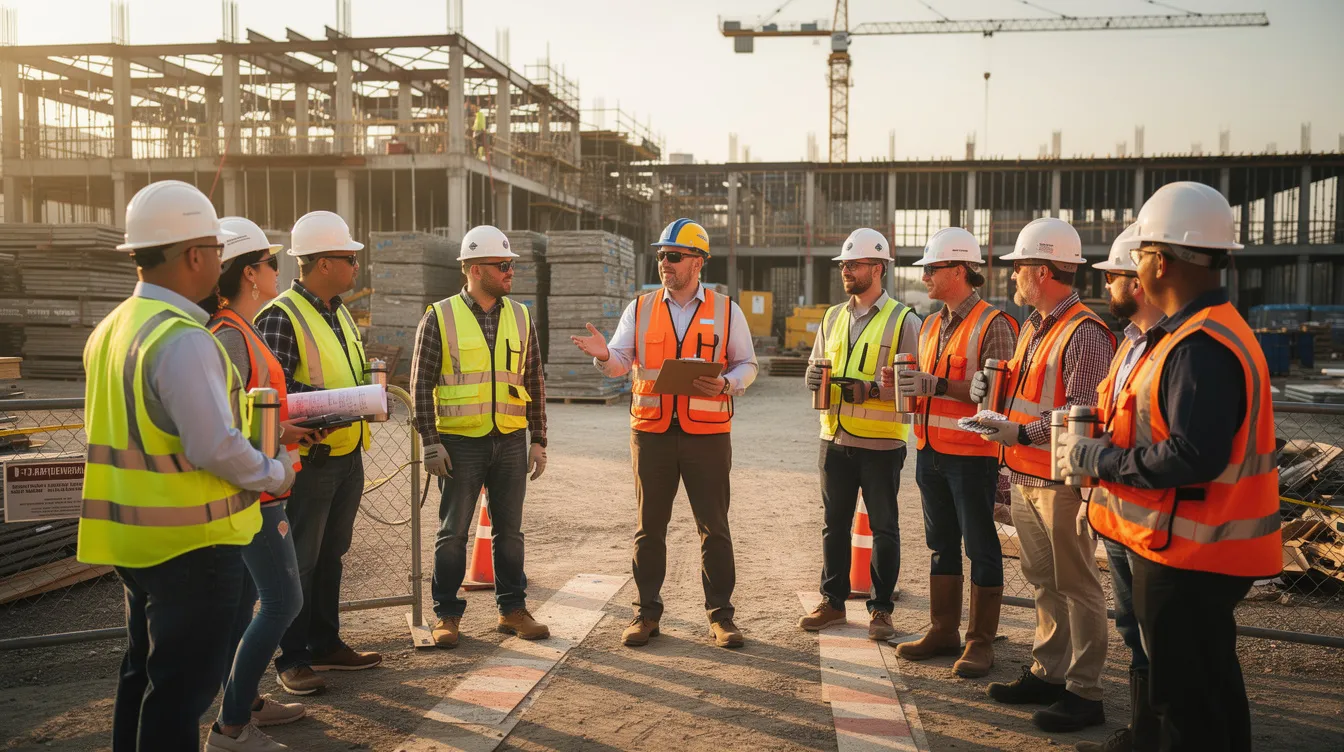
Why Suicide Prevention Belongs Inside Jobsite Leadership
Construction workers face elevated suicide risk, and OSHA’s construction suicide-prevention page frames that risk as a workplace issue leaders should address directly. OSHA also points employers to construction-specific awareness tools and to 988 for crisis support.
That matters for South Texas contractors because the people who shape crew culture are rarely sitting in a corporate office. They are on the project: superintendents opening the week, foremen running huddles, project managers setting expectations, and safety leaders deciding what gets reinforced consistently.
When mental health and suicide prevention are treated as separate from safety, the message usually weakens. It becomes something posted, announced, and forgotten. Construction wellness programs work better when they are treated like other field systems: visible, repeated, role-based, and easy to use under pressure.
The goal is to help protect life and strengthen the support structure around the workforce. Supervisors are not being asked to become counselors. They are being asked to recognize concern, respond appropriately, and connect workers with help.
What South Texas Leaders Need To Understand First
OSHA maintains a mental health and suicide-prevention publication hub and includes a construction-specific poster titled Suicide Prevention in Construction: 5 Things You Should Know. OSHA’s construction page also directs people in crisis to call or text 988.
That gives contractors a practical baseline, but a usable construction wellness program needs more than downloaded materials. It helps to think in three layers:
- Awareness: Posters, toolbox talks, orientation messaging, and clear information about where help is available.
- Early response: A supervisor or coworker notices a change, starts a private conversation, and avoids brushing it off.
- Escalation and referral: The company has a clear path for contacting 988, emergency services, HR, an EAP (if offered), or another designated internal resource.
On South Texas jobsites, warning signs may show up as sudden withdrawal, visible hopelessness, unusual risk-taking, sharp mood changes, repeated absences, or a worker who no longer seems engaged with the crew. On bilingual crews, those changes may be easy to miss if leaders rely only on public group conversations. That is one reason bilingual communication matters: the goal is not only translation, but trust.
One important boundary should be clear in every policy and training session: if someone appears to be in immediate danger, no supervisor should promise confidentiality. Immediate safety comes first.
What Gets Reinforced Every Day on the Jobsite
Crews pay attention to what leaders repeat. If the daily message is to push through, stay tough, and keep personal problems off the site, workers learn quickly that speaking up carries risk. If the message is that asking for help is part of staying fit for duty, the culture moves in a different direction.
That makes foremen and superintendents central to construction wellness programs. Small habits matter:
- How a foreman responds when someone looks off their game
- Whether a superintendent makes space for a private conversation
- Whether safety meetings mention crisis resources in a matter-of-fact way
- Whether leaders mock stress or normalize support-seeking
For South Texas contractors, consistency matters most on multi-site operations stretching across San Antonio, the I-35 and I-10 corridors, and other regional project locations. If one site treats wellness seriously and another treats it as a joke, crews get mixed signals fast.
Communicate key points in the languages used on the project. Where sensitive conversations are likely, use bilingual leads or interpreters who can help the message land clearly and respectfully.
The South Texas Operating Conditions That Make This Harder
Construction work in South Texas often combines long commutes, variable start times, heat, overtime, and multi-employer coordination across dispersed sites. Those conditions do not by themselves explain a mental health crisis, but they can make stress harder to manage and warning signs easier to miss.
Think about the operating reality many contractors already know:
- Early starts or night work during hot-weather periods
- Long drives along the I-35 and I-10 corridors
- Crews moving between projects with different supervisors and expectations
- Tight schedules that make private conversations feel inconvenient
- Bilingual or multicultural teams where stigma may suppress open discussion
These are exactly the conditions that make construction wellness programs worth systematizing. If leaders wait for the perfect moment, they usually wait too long. A better approach is to build short, repeatable practices into the existing safety rhythm.
Designing Construction Wellness Programs for Real Jobsites
A practical construction wellness program does not need to be complicated. It does need to be specific enough that supervisors know what to do.
At a minimum, effective construction wellness programs should include:
- Leadership commitment. Owners and senior leaders should state clearly that mental wellness and suicide prevention belong inside the company’s safety culture.
- Written response steps. Supervisors need a simple procedure for non-emergency concerns, urgent concerns, and immediate danger.
- Recurring communication. Short toolbox talks and periodic reminders keep the topic visible without turning every meeting into a lecture.
- Access to support. Every site should know how to reach 988 and any company-provided support path such as an EAP, HR contact, or designated manager.
- Post-incident planning. If a crisis, attempt, or loss affects a crew, leaders should have a plan for communication, support, and next steps.
It also helps to fold wellness into systems the company already uses. For example, safety boards can include 988 information, orientation can explain escalation procedures, and regular supervisor training can include short role-play practice for hard conversations.
That integration matters because stand-alone wellness messaging is easy to skip when schedules tighten. A system embedded in the normal safety process is more likely to survive real project pressure.
A Field Decision Tool for Supervisors: Notice, Ask, Stay, Connect
Many articles stop at awareness. Supervisors usually need a simple decision tool. For construction wellness programs, the most practical field version is this four-part sequence:
1. Notice
Look for a meaningful change rather than trying to diagnose a condition. Has the worker become withdrawn, reckless, unusually angry, repeatedly absent, or openly hopeless? Has something shifted enough to warrant a check-in?
2. Ask
Move the conversation to a private space and use direct, plain language. For example:
“I’ve noticed you don’t seem like yourself this week. I care about you and wanted to check in.”
On a bilingual crew, a bilingual lead may need to help deliver the message in the worker’s preferred language.
3. Stay
If the situation feels urgent, do not leave the person alone. Stay calm, stay present, and follow company escalation procedures. If there is immediate danger, call 911. If the person is in crisis but not in immediate physical danger, call or text 988 for guidance and support.
4. Connect
Help the worker reach the next level of support. That may mean contacting 988, connecting them with HR, helping them access an EAP if one exists, or notifying the designated company contact under the firm’s procedure. Document the concern and response in line with company policy.
This is where many construction wellness programs fail: they tell supervisors to care but don’t tell them what the next move looks like. A short decision sequence removes guesswork.
Clarifying Roles: Who Does What?
A strong response depends on clearly defined roles.
Owners and executives set the tone, approve policy, and make sure the topic is treated as part of the company’s operating culture rather than an optional extra.
Safety leaders help build the training rhythm, align wellness with broader safety practices, and ensure each site has visible resources and clear escalation paths.
HR manages benefit access, leave, accommodations where applicable, and communication pathways that require privacy and legal care.
Project managers, superintendents, and foremen are the people most likely to notice a problem first. Their role is to observe, start the conversation, escalate appropriately, and avoid handling a crisis alone.
If your company does not already have one, create a one-page response flowchart for orientation binders, safety boards, and supervisor training. It should answer three questions fast:
- When do we call 911?
- When do we call or text 988?
- Who inside the company must be notified?
Company procedures for documentation, privacy, leave, and post-incident handling should be reviewed with current HR and legal counsel so site leaders don’t improvise on a sensitive issue.
Using ABC South Texas Resources in Your Approach
ABC South Texas supports safety culture through its Safety Programs, and its safety page describes Total Human Health as a holistic approach to employee well-being. That makes the chapter a natural implementation partner for contractors that want to strengthen a construction wellness program without starting from zero.
The chapter’s Education & Training resources can help companies build supervisor confidence, leadership communication, and training consistency. The STEP safety program gives contractors an organized framework for analyzing and developing safety and loss-prevention programs, helping companies think more systematically about how wellness fits into the broader safety system.
For firms also working on foreman and superintendent capability, ABC South Texas’ related article on construction leadership training is a useful companion because wellness leadership is ultimately a field-leadership skill.
A 30-Day Rollout Plan for South Texas Contractors
If your company wants to strengthen construction wellness programs this month, use a simple 30-day sequence.
Week 1: Assess current readiness. Review current policies, identify who handles escalation, confirm whether 988 information is posted, and check whether supervisors know what to do today if a worker appears in crisis.
Week 2: Build the field tools. Post OSHA’s construction suicide-prevention materials in English and Spanish where appropriate. Create a one-page response flowchart. Add 988 information to safety boards and orientation materials.
Week 3: Train supervisors. Hold a short session for foremen, superintendents, PMs, HR, and safety leads on warning signs, private conversation basics, and the Notice-Ask-Stay-Connect sequence.
Week 4: Practice and reinforce. Run a short role-play, test the escalation path, gather supervisor feedback, and revise the process where confusion still exists.
By the end of 30 days, every active project should have visible crisis-resource information, a named internal contact path, and site leaders who have practiced the response at least once.
If you need a first step, start with your existing safety structure. Review ABC South Texas safety programs, then decide whether your next move is supervisor training, a policy refresh, or stronger integration with STEP and your existing safety process.
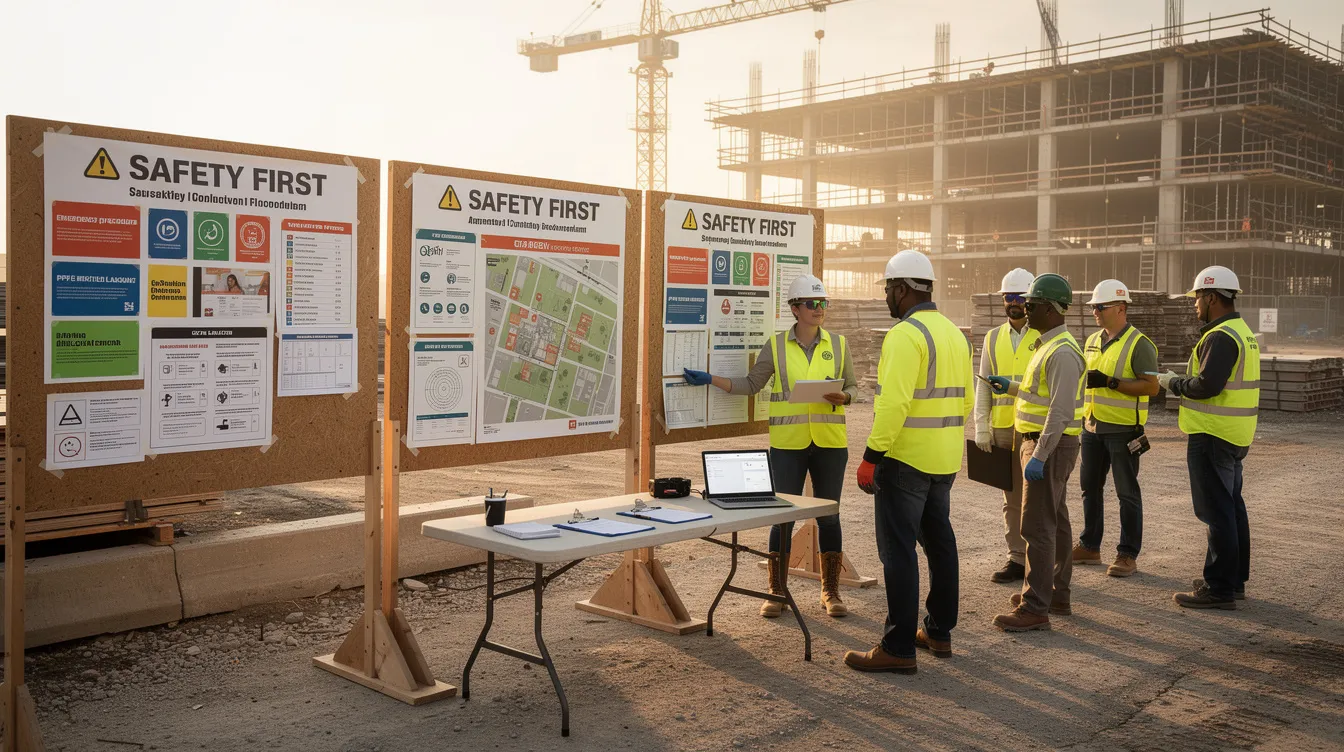
Supervisor Checklist: A Practical Construction Wellness Program Audit
Use this quick checklist on each active project:
- Is 988 posted where workers can easily see it?
- Do foremen and superintendents know the difference between calling 911 and contacting 988?
- Is there a named company contact for non-emergency mental health concerns?
- Do orientation materials explain how a worker can ask for help?
- Are key messages available in the languages used on site?
- Have supervisors practiced a private check-in conversation at least once?
- Is there a written response path for urgent and non-urgent concerns?
- Would a new supervisor on this site know exactly what to do today?
If several of those answers are no, your construction wellness program likely depends too much on individual personality instead of a repeatable system.
Frequently Asked Questions
Below are answers to common questions about this topic.
How is a construction wellness program different from an Employee Assistance Program?
A construction wellness program is the broader operating approach. It includes leadership behavior, awareness, response steps, site communication, and integration with safety practices. An EAP, if a company offers one, is one support resource inside that larger system.
When should a supervisor call 988 versus 911?
Call 911 if there is immediate danger, self-harm in progress, a weapon involved, or a medical emergency. Call or text 988 when a worker is in emotional distress or a mental health crisis, but there is no immediate physical danger requiring emergency responders.
What should a company do after a suicide loss or serious attempt affecting a crew?
The company should have a post-incident response plan that covers prompt communication, support resources, leadership visibility, and internal review of whether policies or response steps need improvement. Follow legal, privacy, and company requirements carefully, and review those procedures with current HR and legal counsel.
How can a smaller contractor support this without a large HR department?
Start with the basics: post 988 information, use OSHA’s free construction materials, define one internal escalation path, and train supervisors on how to hold a private check-in conversation and when to escalate.
How often should construction wellness programs be refreshed?
At minimum, review the process during supervisor training, new-hire onboarding, and periodic toolbox talk cycles. Keep the topic visible throughout the year in normal safety communication rather than waiting for a single awareness window.


