


South Texas contractors working along I-35, I-10, and across the San Antonio metro face a construction work zone safety challenge that generic reminders do not solve. On corridor and utility work, the public traffic setup can look complete while the inside of the zone still has unresolved conflicts between crews, trucks, and equipment. That is often where preventable struck-by exposure, backing incidents, and costly shutdowns begin.
This article takes a narrower angle than a general work-zone overview. It focuses on the field distinction many teams blur under schedule pressure: the difference between the temporary traffic control plan and the internal traffic control plan. OSHA’s highway work-zone guidance explains that workers can be exposed to hazards from passing public traffic outside the work area and from construction vehicles and equipment moving inside it. For South Texas contractors, that means reviewing both plans before shifting traffic or moving trucks.
Key Takeaways
- Construction work zone safety depends on controlling two exposure paths: live public traffic outside the work area and construction traffic inside it.
- OSHA guidance supports using a traffic control plan where vehicles move through areas where workers are performing tasks, while internal traffic planning addresses movement within the worksite.
- The most useful field distinction is simple: the temporary traffic control plan manages what the public sees, while the internal traffic control plan governs how crews, trucks, and equipment move inside the zone.
- For South Texas corridor work, the fastest gains usually come from better internal routing, tighter backing controls, cleaner separation of pedestrians and equipment, and a supervisor review before each phase change.
- ABC South Texas members can use the chapter’s safety programs to strengthen traffic-control discipline, training, and loss-prevention systems.
Why This Topic Deserves Its Own Spoke
ABC South Texas already has a broad work-zone resource, so this article is intentionally narrower. Instead of repeating general work-zone tips, it gives supervisors and project leaders a practical tool for one specific failure point: what happens inside the closure after signs, drums, tapers, and barriers are set.
That matters on San Antonio and Bexar County corridor work because highway and utility projects rarely operate like fenced building sites. Crews may work only a few feet from live lanes while dump trucks, loaders, delivery vehicles, and support equipment move through the same compressed space. A public-facing traffic setup can be technically complete while the inside of the zone still has crossing conflicts, backing exposure, or unclear pedestrian routes.
The recurring failure patterns are usually operational:
- Lane closures activated before the full setup and inspection are complete
- Signs and channelizing devices placed for motorists without a workable internal route for trucks and crews
- Backing movements introduced because staging areas or haul paths were not thought through
- Pedestrian shortcuts developing when the designated walkway is too long, blocked, or unclear
- Phase changes made in the field without updating how workers, equipment, and deliveries interact
That is why construction work zone safety on South Texas corridor jobs should be reviewed as a two-plan system, not a cones-and-signs checklist alone.
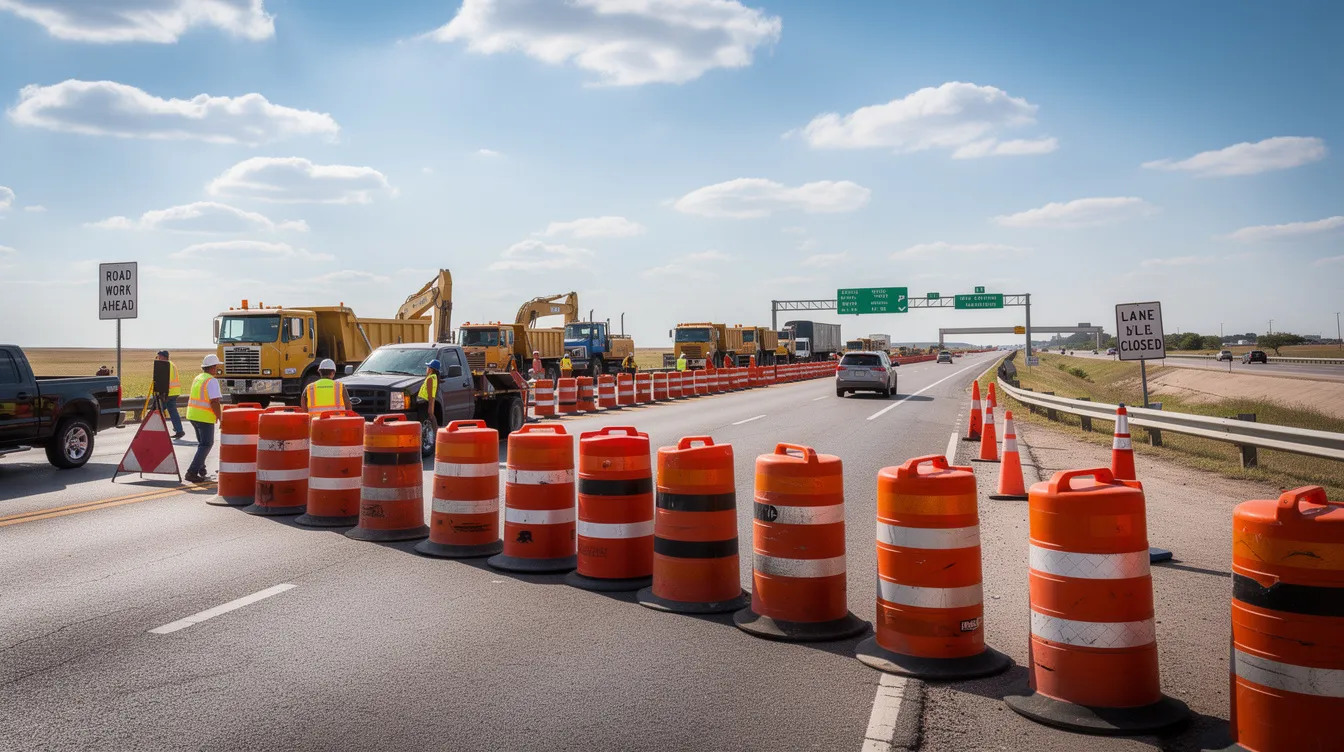
What OSHA and TxDOT Support for South Texas Contractors
OSHA’s highway work-zone materials describe two exposure sources that matter here: passing motor vehicle traffic outside the work area and construction vehicles and equipment moving within it. OSHA also provides work-zone traffic safety guidance addressing traffic-control planning where vehicles move through areas where workers are conducting other tasks.
That does not mean every project needs the same level of documentation. It does mean contractors should treat internal traffic planning as a real control, not an informal conversation in the field.
For state highway work, TxDOT maintains traffic-control standards and design practices for state highway construction and maintenance projects, including current work-zone traffic-control resources and TMUTCD temporary traffic-control materials. TxDOT also provides smart work-zone guidance for projects where intelligent transportation systems may improve safety and mobility.
For contractors bidding or managing TxDOT work in San Antonio, Bexar County, and the broader South Texas footprint, the practical takeaway is straightforward: make sure the approved public traffic layout and the field’s internal movement plan actually match the phase you are about to run.
This article is educational, not legal advice. Project-specific requirements can vary by owner, roadway classification, contract documents, and jurisdiction.
Temporary Traffic Control Plan vs. Internal Traffic Control Plan
The clearest way to understand the difference is this:
- Temporary traffic control plan: how the public moves around the work area
- Internal traffic control plan: how workers, trucks, and equipment move inside the work area
Both matter because many work-zone incidents happen in the handoff between them.
| Temporary Traffic Control Plan | Internal Traffic Control Plan | |
|---|---|---|
| Primary focus | Motorists and public traffic | Workers, trucks, and equipment inside the zone |
| Typical elements | Advance signs, tapers, channelizing devices, barriers, transitions | Haul routes, entry and exit points, spotter positions, walkways, staging areas |
| Main question | How do road users get through or around the work area? | How do crews and vehicles move without crossing each other unsafely? |
| Review timing | Before the closure or shift goes live | Before mobilization, before each phase change, and when field conditions drift |
South Texas example: imagine a nighttime utility cut on Loop 410. The public-side layout may have the correct advance warning signs, taper, and channelization. But if dump trucks must cross the laborers’ walking path to reach the spoil area, or if deliveries enter from the blind side of the closure, the inside of the zone is still unstable. That is an internal traffic problem, even if the outside setup looks complete.
A Practical Review Tool: The Two-Plan Stress Test
Before opening a lane closure or changing phases, review these questions in order:
1. Is the public-side setup complete and visible?
- Are signs, tapers, drums, barriers, and lighting in place for the phase being opened?
- Can approaching drivers see the setup clearly in actual field conditions, including darkness, glare, weather, or sight-distance limits?
- Have you checked both directions of travel where applicable, not just the approach nearest the crew?
2. Can trucks and equipment move through the work area without improvising?
- Are entry and exit points defined?
- Are haul routes obvious to drivers who are unfamiliar with the site?
- Can large vehicles pull through, or have you created repeated backing exposure?
3. Are workers separated from vehicle paths?
- Is there a designated pedestrian route?
- Does that route avoid blind spots, swing radii, and crossing points?
- Will crews actually use it, or are shortcuts developing?
4. Are backing controls clear?
- Where is backing unavoidable?
- Who is spotting, by what method, and from what position?
- Do operators and spotters understand the same radio channel or hand signals?
5. Has the phase change created a new conflict?
- Did staging move?
- Did pedestrian access shift?
- Did a new subcontractor or delivery pattern get added without revising the internal flow?
If any answer is unclear, the work zone is not ready. That is the point where good superintendents pause, fix the layout, and then proceed.
The Control Stack That Helps Prevent Losses
Construction work zone safety works best as a layered system. No single device or rule solves every hazard, especially on fast-moving South Texas corridor projects. The field review should cover these layers together:
- Public-side traffic control: signs, channelization, tapers, barriers, and visibility matched to the active phase
- Internal traffic control: documented routes, entry points, staging, and worker separation inside the zone
- Backing controls: one-way flow where possible, spotters where needed, and no-pedestrian zones around heavy equipment
- Communication: pre-shift briefing, shared signals, radio discipline, and stop-work authority
- Supervision: one person owning the internal flow each shift instead of assuming everyone sees the same hazards
- Worker visibility and PPE: high-visibility apparel and task-appropriate PPE consistently worn and checked
That layered approach aligns with ABC South Texas’s safety programs. The chapter says its mission is to help members win work and deliver that work safely, ethically, and profitably for the betterment of South Texas, and its safety programs page describes STEP as a structured framework for strengthening company-wide safety and loss-prevention systems.
South Texas Conditions That Change the Plan
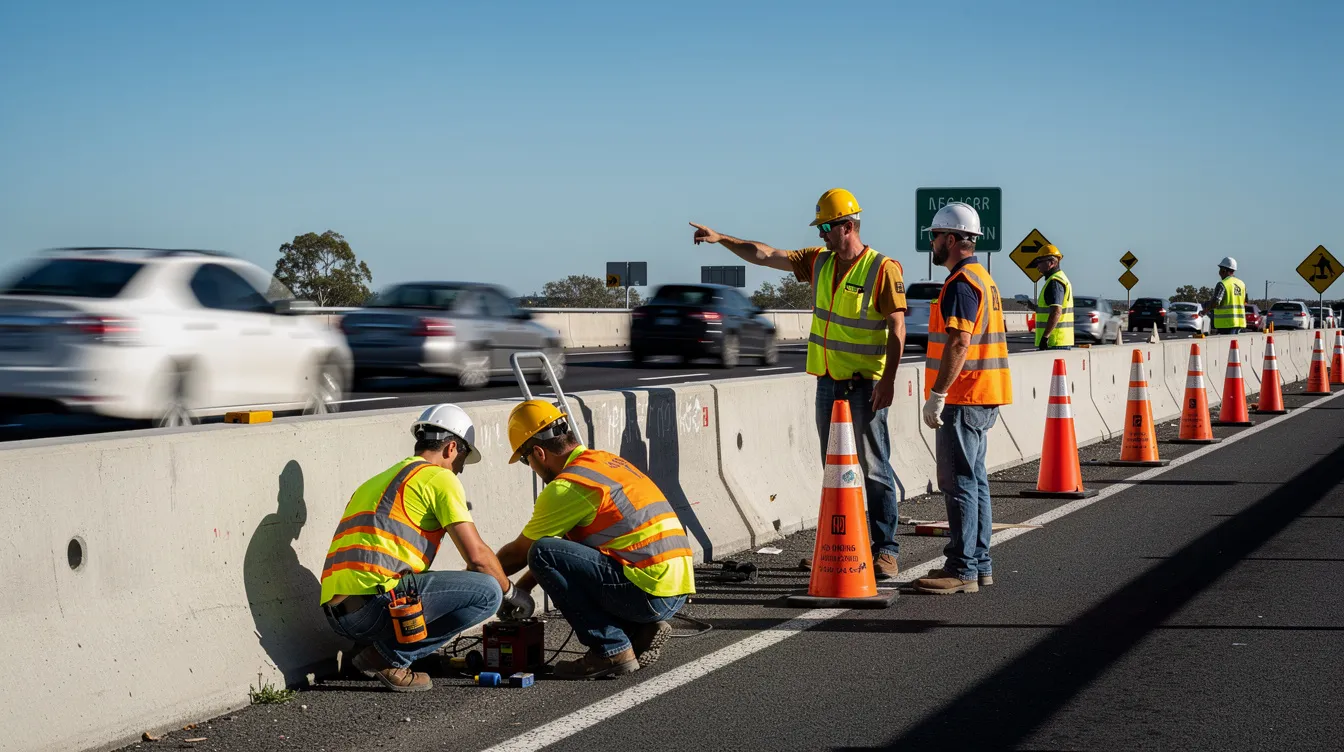
Work zones on I-35, I-10, Loop 410, and other high-volume South Texas corridors need more than standard repetition. Local conditions change how the plan behaves in the field:
- Narrow shoulders and limited buffer space: less room for recovery if layout or routing is off
- Frequent ramps and merges: more conflict points at entries, exits, and transitions
- Heavy freight traffic: bigger vehicles, longer stopping distances, and more consequences when queues form
- Night work: reduced visibility, fatigue, and a greater need to confirm the setup instead of assuming it looks right
- Heat: in warmer months, fatigue and slower reaction time can affect both field crews and equipment operators
On city arterials in San Antonio, the plan may also need to address bus stops, business access, driveways, and pedestrian crossings. On those jobs, internal traffic discipline still matters because short-duration work can quickly become chaotic when trucks, on-foot workers, and the public share constrained space.
Managing Backing and Reversing Exposure
Backing hazards deserve special attention because they are one of the most predictable internal work-zone risks. The goal is not to write “use a spotter” into a plan and move on. It is to eliminate unnecessary backing first, then tightly control what remains.
Useful field controls include:
- Designing pull-through routes wherever the site allows
- Setting one-way circulation patterns for dump trucks and deliveries
- Keeping pedestrian paths out of blind-side backing areas
- Assigning spotters by name and position in congested zones
- Checking alarms, lights, and reflective devices before night operations begin
This is where superintendent leadership matters. If the crew has to improvise truck movement because the spoil area, laydown zone, or access point changed mid-shift, backing exposure rises immediately. A short pre-task reset is cheaper than an incident investigation.
For companies developing field leaders, this also connects naturally to superintendent training. Internal traffic control is not just a safety department topic; it is a field-execution skill.
When Smart Work Zones Make Sense
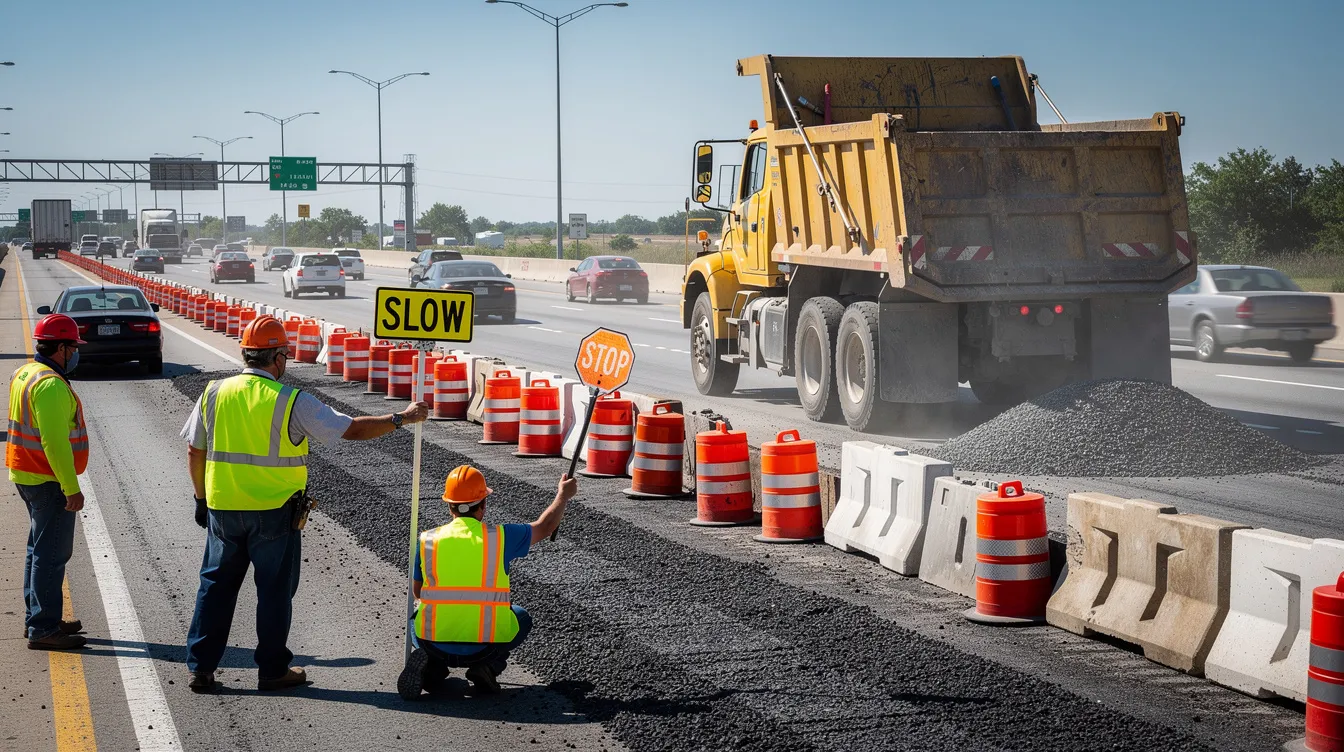
TxDOT describes smart work zones as using intelligent transportation systems in work zones to improve safety for motorists and work-zone personnel, reduce delay, and provide performance metrics for future improvements.
These tools can make sense on heavier South Texas corridors when the exposure justifies them, especially on:
- Longer-duration interstate closures
- Projects with recurring queues or sudden slowdowns
- Locations with limited sight distance or higher end-of-queue risk
Relevant tools may include portable message signs, queue detection, speed feedback systems, or other warning technologies. But treat them as support layers. They do not replace a sound temporary traffic control plan or a disciplined internal traffic control plan.
Supervisor Checklist Before Opening the Zone
Use this as a pre-opening review for lane closures, utility work zones, and active corridor phases:
- Confirm the field setup matches the approved traffic-control phase in use.
- Walk the approaches and verify visibility, sight distance, and any conflicts at ramps, signals, driveways, or stops.
- Verify internal routes for trucks, equipment, and deliveries.
- Mark or communicate pedestrian paths that avoid backing areas and blind spots.
- Review spotter assignments, radio channels, and hand signals before equipment starts moving.
- Check staging, laydown, and spoil locations so operators don’t have to improvise.
- Confirm lighting, reflective devices, and high-visibility apparel for night or low-light work.
- Hold a short huddle in English and Spanish as needed so every crew understands the same flow.
- Recheck the zone after any weather event, near miss, or phase change.
- Pause the opening if any part of the public-side or internal plan is unclear in the field.
This checklist works best when one supervisor owns it. Shared responsibility is useful; unowned responsibility is not.
How ABC South Texas Can Help Members Improve Construction Work Zone Safety
ABC South Texas supports members with safety training and programs that can reinforce the systems behind better work-zone execution. The chapter’s safety page highlights OSHA-related training, CPR/First Aid, the OSHA Alliance context, STEP, and Total Human Health resources that can help companies build stronger field discipline and loss-prevention habits.
For contractors that want to improve construction work zone safety, a practical next step is to use this article’s two-plan stress test on one active or upcoming corridor job, then compare the findings against your current company procedures. If internal traffic planning is still informal, that gap is a good place to tighten supervision, training, and pre-task review before the next mobilization.
Frequently Asked Questions About Construction Work Zone Safety in South Texas
Below are answers to common questions about this topic.
What is the practical difference between temporary traffic control and internal traffic control?
Temporary traffic control manages how motorists and the public move around the work area. Internal traffic control manages how workers, trucks, and equipment move inside it. The first controls the outside edge of exposure; the second controls the inside edge.
Does every project need an internal traffic plan?
The level of formality can vary by project, but work where vehicles and workers interact should not rely on improvisation. OSHA’s work-zone guidance supports planning for vehicle movement where workers are performing tasks, and contractors should treat internal traffic planning as part of safe execution.
How often should we review the internal plan?
Review it before mobilization, before a closure opens, at each major phase change, after near misses, and whenever field conditions drift from the original layout. It should function as a living field control, not a document that stays in the trailer.
What is the best first improvement if our crews still improvise truck movement?
Start by mapping one-way haul routes, entry and exit points, staging areas, and pedestrian paths on a single active project. If the route only works when everything goes perfectly, it is not a strong route. Adjust it until drivers and crews can follow it consistently without improvising.
When should we consider smart work-zone tools?
Usually on higher-speed, higher-volume, or longer-duration work where queue warning, speed awareness, or real-time traffic information can add value. Use them to support the plan, not substitute for it.


