


South Texas’s data center construction sector is experiencing unprecedented growth driven by AI compute demand, and the latest national spending data confirms it. The data center construction market in South Texas is expanding as cloud computing and AI workloads grow, with Texas emerging as a premier national powerhouse for digital infrastructure. San Antonio has become one of the nation’s fastest-growing data center markets.
That momentum creates a real decision for South Texas contractors: pursue more mission-critical work, or tighten your qualification standards before adding backlog you may not be able to execute well.
This article is a decision brief for South Texas construction leaders navigating data center construction opportunities and the risks that come with them. Cloud computing infrastructure, AI workloads, and high-performance workloads are fueling data center demand across Texas, including along the I-35 and I-10 corridors. But execution capacity in labor, supervision, and power infrastructure is the real constraint.
The bottom line: strong demand does not make every data center project a good fit for every contractor.
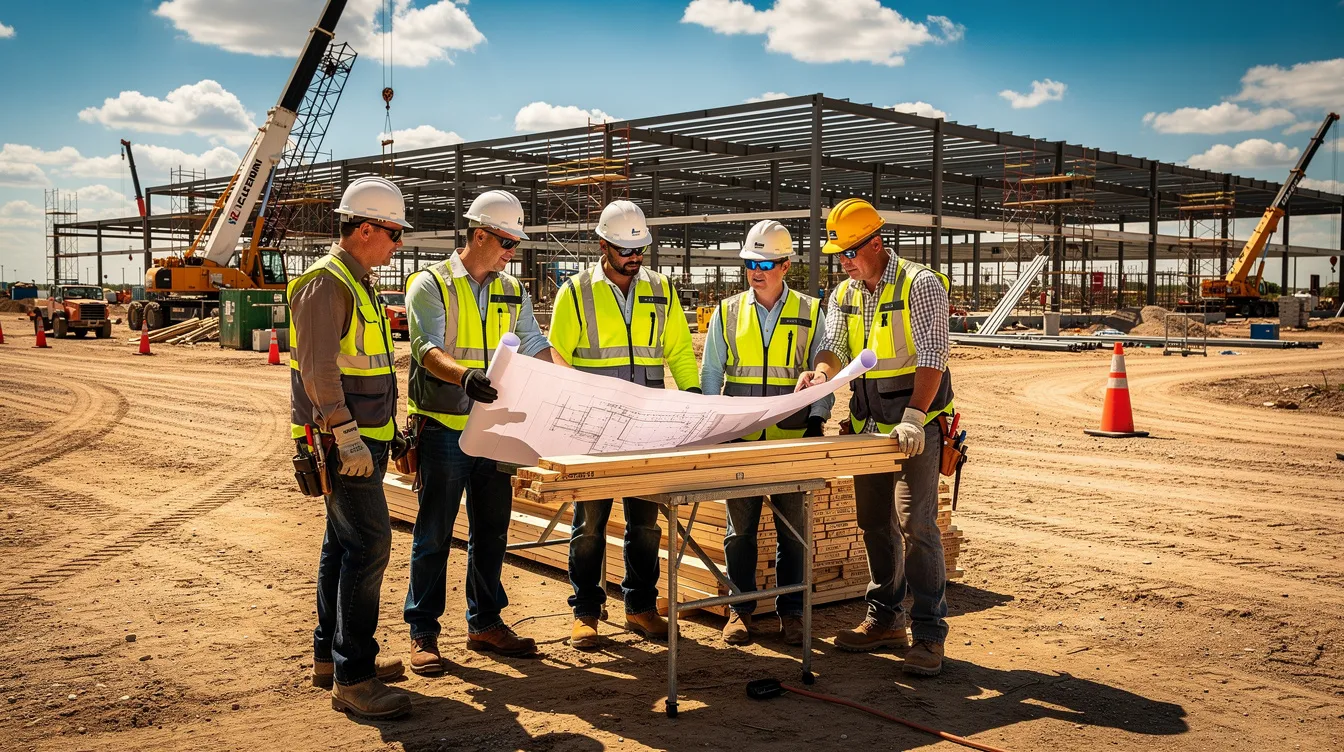
What the Latest Spending Data Actually Says About Data Centers
Monthly U.S. Census construction spending reports show nonresidential spending rising through 2026, with mission-critical data centers among the fastest-growing segments. National data center construction spending rose more than 73% over the past 12 months. Year-to-date data center starts through mid-2026 totaled roughly three times the level of a year ago and represented nearly one quarter of all nonresidential building starts.
Texas added approximately 95,000 construction jobs since August 2024, reflecting the scale of investment flowing into new construction across the state. Nationally, data centers may require up to 100,000 megawatts of power, and many new projects require five times more power than existing facilities, which underscores how capital-intensive these builds are.
Contractors performing data center work report materially longer average backlog (roughly 11 months or more) than peers without that exposure (closer to 8 months). That sounds positive, but it also locks in resource commitments for many months ahead.
Spending data does not tell you whether an individual project is buildable at your target margin. That is why South Texas firms need disciplined planning before saying yes to the next RFP.
Why This Matters Specifically in South Texas
Data center construction in South Texas involves navigating unique regional challenges that national spending figures do not capture. In San Antonio, Bexar County, and surrounding counties, including the I-35 corridor from San Marcos to Austin, industrial and technology projects already strain labor, supply chains, and utility capacity. Data center projects compete directly with healthcare, military-adjacent, manufacturing, and logistics jobs along the I-35 and I-10 corridors for the same electricians, pipefitters, plumbers, sheet metal workers, and supervisors.
Cooling systems in South Texas data centers must manage high ambient temperatures and humidity, which adds cost and complexity to MEP systems. Data centers in South Texas often face scrutiny over water consumption, and some communities evaluate whether a proposed facility could use significant water annually. Securing a reliable water supply for cooling towers in South Texas requires early dialogue with local water districts, and data centers’ high-volume cooling needs emphasize water stewardship. Current projections suggest data centers could account for 3% to 9% of Texas’ water use by 2040.
Data centers in South Texas require reliable, high-capacity telecommunications infrastructure, and each data center location depends on fiber access, power availability, and suitable land. Extending fiber connectivity deep into South Texas requires mapping robust dark fiber corridors well before construction starts. Data centers in South Texas also face challenges from hurricanes and severe storms due to proximity to the Gulf Coast, adding resilience requirements that affect structural and MEP design.
Recent and planned large-scale facilities near San Antonio and central Texas mean local contractors are increasingly being invited into highly technical, schedule-compressed work. Readers who want a broader macro view can consult the South Texas backlog planning guide for additional context on how to read backlog strength against real capacity.
For many South Texas firms, the question is not whether there will be enough data center work. It is which part of this work fits your people, cash flow, and risk tolerance.
Who Should Lean Into Data Center Work and Who Should Be Cautious
Not every contractor should chase the same type of project. Here is a practical screen.
The core trades and scopes that benefit most from data center demand include electrical, mechanical, HVAC, pipefitting, plumbing, sheet metal, controls, fire protection, low-voltage, civil and site work, and structural concrete and steel. Data center projects require a higher ratio of commissioning technicians than traditional craft, which means firms need deeper technical benches.
South Texas contractors that are good candidates to expand data center exposure share common traits: a stable supervision bench, a strong QA/QC culture, experience with complex MEP coordination, and demonstrated success on fast-track or 24/7 facilities, backed by strong technical support from preconstruction, VDC, QA/QC, and commissioning teams. The I-35 corridor’s warehouse labor force is projected to grow by 21.2%, which compounds competition for skilled trades across the region. Accelerated data center pathway programs report 90% job placement within one month, signaling both opportunity and talent scarcity.
Firms that should qualify much harder include those with a thin foreman and superintendent bench, limited experience with large commissioning scopes, inconsistent manpower reliability, or a high current EMR that complex projects would stress further. Small and mid-sized contractors may be better served specializing in well-defined scopes (concrete, interiors, or select MEP packages) rather than trying to prime entire hyperscale campuses.
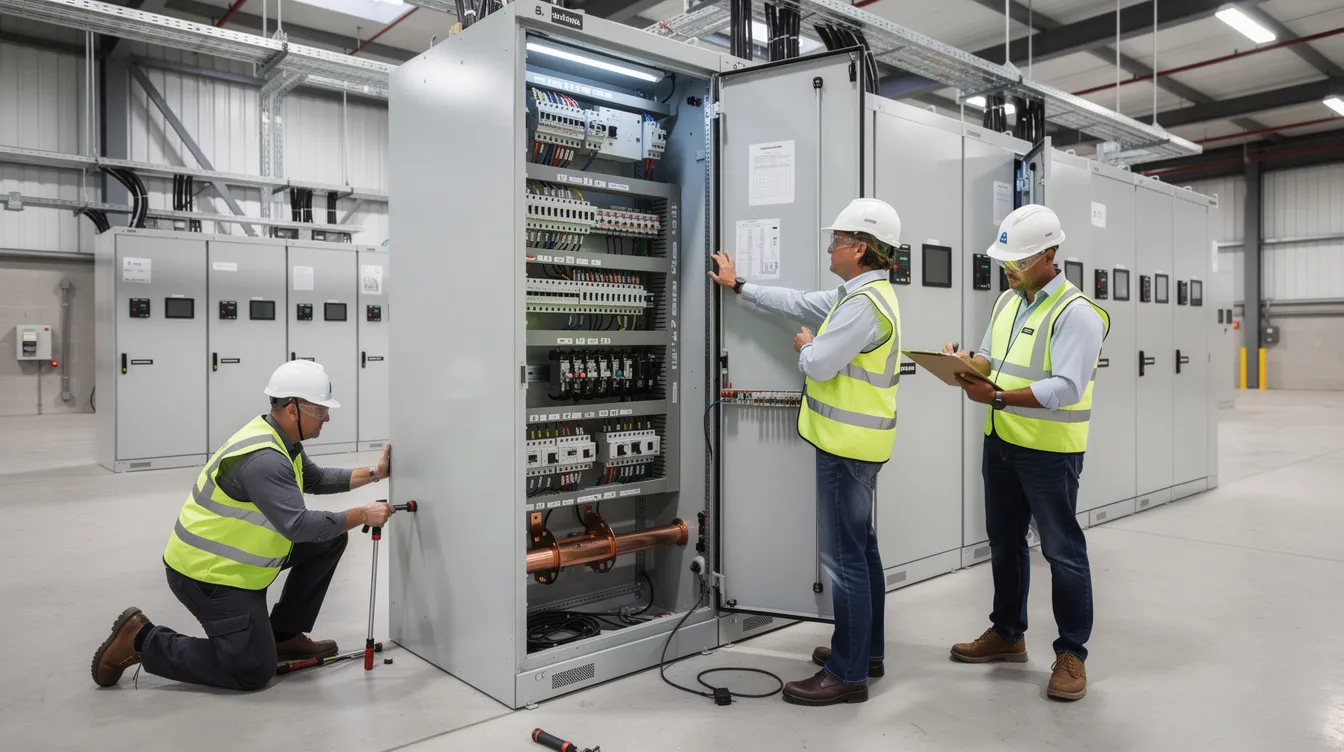
Five Questions to Qualify Any New Data Center Pursuit
Before committing field and office resources to another data center pursuit, run each opportunity through these five questions.
Manpower. Can you staff this project with your own craft workers and trusted subs without pulling crews off existing commitments, especially during peak months of Texas summers when productivity drops and heat illness risk rises?
Supervision. Do you have enough experienced project managers, general superintendents, and mission-critical foremen to handle the complexity of night work, commissioning, and intensive RFI cycles without burning them out? Data center work demands deep coordination that thin supervision cannot sustain.
Procurement. Are long-lead items like switchgear, generators, UPS systems, chillers, and controls packages realistically available within the proposed schedule? AI workloads could increase cooling energy demand tenfold by 2026, driving heavy demand for cooling equipment. Currently, 22% of data centers now use liquid cooling technologies, and liquid cooling can achieve a fourfold increase in compute density. Newer approaches include direct-to-chip cooling, which delivers coolant directly to heat-generating components, and immersion cooling, which submerges servers in dielectric fluid to manage heat. These systems require specialty procurement pipelines. Does the contract protect you if equipment is delayed?
Schedule and Utilities. Is the schedule tied to realistic milestones for available power and water? Data centers may require five times more power than existing facilities, and power availability is a major bottleneck due to ERCOT demand projections. Over 225 large interconnection requests were reported in early 2026, and wait times for power interconnection can reach three to four years. If you are being asked to commit to dates that depend on approvals outside your control, that risk belongs in your pricing or your decline letter.
Margin and Risk. After pricing overtime, specialty testing, cybersecurity requirements, and extended commissioning, does the remaining margin justify tying up this much of your field and office bandwidth? A project that looks cost-effective on paper can erode fast under schedule pressure.
Spotting Red Flags in Mission Critical RFPs and Contracts
Watch for early warning signs that a data center opportunity carries outsized risk.
- Vague owner criteria for “substantial completion” tied to IT go-live rather than physical building turnover, with undefined tolerance or scope for uptime testing
- Unlimited or excessive liquidated damages, particularly those that shift schedule risk for owner dependencies (power, approvals, fiber, water) onto the contractor
- Unclear responsibility for BMS integration, commissioning scripts, data center infrastructure pathways, and uptime verification that can drag field teams long after “physical completion”
- RFPs assuming 24/7 schedule flexibility without recognizing South Texas heat, safety constraints, and mandatory rest periods
Environmental permitting can significantly affect data center development schedules in Texas. Local governments in South Texas are introducing stricter regulatory frameworks for data centers, and Texas has introduced additional oversight of large data center developments in 2026. Developing data centers in South Texas requires careful navigation of regulatory oversight and environmental factors.
When multiple red flags appear together, negotiate stronger protections, price the risk aggressively, or decline the pursuit entirely.
Protecting Margin, Safety, and Capacity When Backlog Is Full
Data center work can look attractive on a WIP report while quietly eroding margin through rework, overtime, and supervision overload. Overcommitted supervisors and exhausted crews on mission-critical jobs increase incident risk, heat illness exposure, and EMR deterioration.
Data centers in South Texas must meet rigorous interconnection standards under the Electric Reliability Council of Texas. Power grid interconnections in Texas often require rigorous planning and compliance for large loads, especially for large data centers. ERCOT manages 90% of Texas’s power grid for data centers, and schedule slips tied to grid access can cascade into costly standby and remobilization.
Multiple fast-track data center projects can cascade into other South Texas jobs, delaying turnovers in healthcare, education, or infrastructure work that your firm depends on for revenue diversity.
Practical controls include:
- Capping the number of concurrent mission-critical projects per superintendent
- Requiring executive review for any schedule with extreme compression
- Including contingency budgets for commissioning and punch list scope growth
- Using safety, STEP, and workforce development resources to sustain safety performance under intense schedule pressure
Using a Backlog and Capacity Review Before Saying “Yes”
Spending strength and RFP volume are not reasons to bypass a disciplined backlog review. Leadership teams in South Texas can run a focused 60- to 90-minute internal review by listing all active and pending projects, identifying which are mission-critical or highly technical, and mapping them against confirmed manpower and supervision capacity.
Distinguish between “paper backlog” (awarded or likely work) and “executable backlog” that can actually be delivered safely and profitably with available resources. A firm reporting 11 months of backlog but missing the supervision depth to execute it is carrying risk, not strength.
The South Texas backlog planning guide offers a deeper resource on backlog quality and capacity planning. Readers may also find the Backlog after the October spending surge article useful as a complementary reference.
After this review, set a green-light threshold: for example, no more than a defined percentage of crews or supervisors assigned to mission-critical projects at any one time.
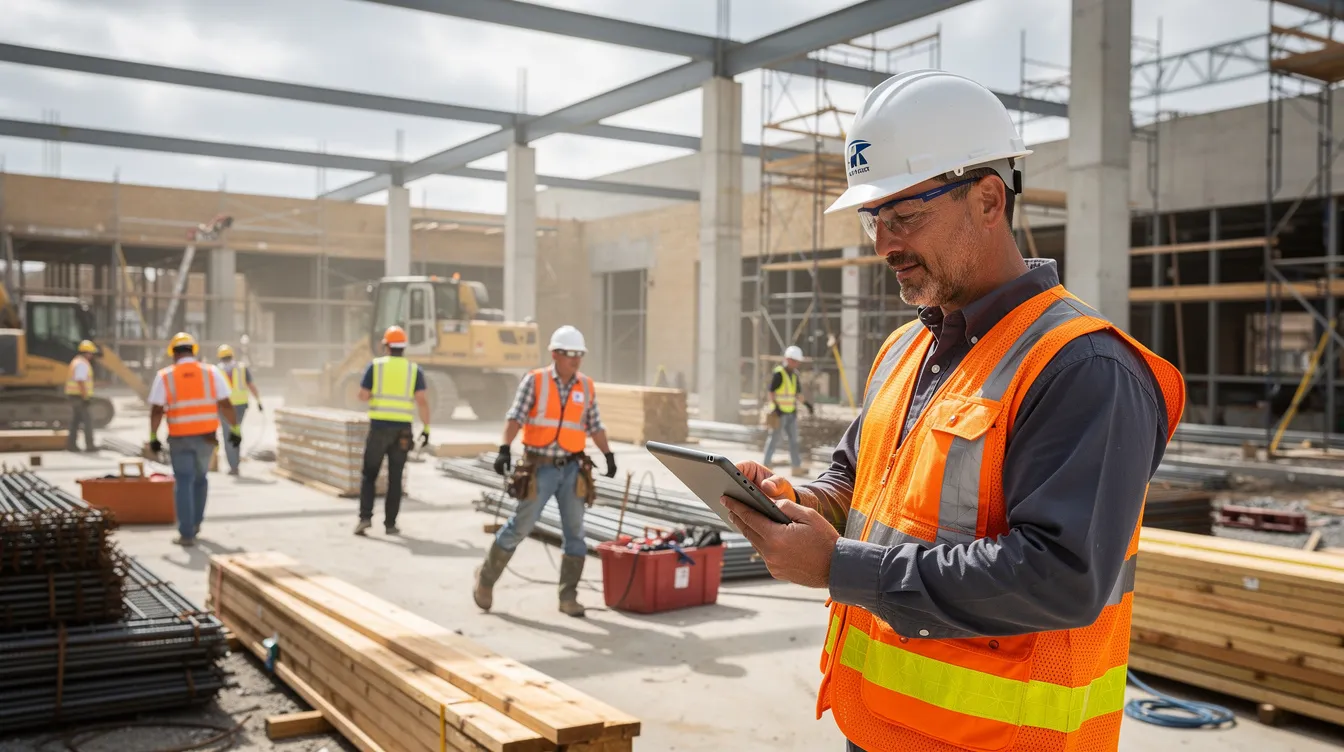
Local Market Signals South Texas Contractors Should Monitor
Beyond national spending data, South Texas contractors should track specific regional signals when deciding how aggressively to pursue data center work.
Major new projects and data center development across Texas illustrate the scale. The Advanced Energy and Intelligence Campus in the Texas Panhandle will have 11 GW capacity. Data City, Texas will reach 5 GW capacity by 2026. The OpenAI Stargate Campus in Abilene is under construction and will have 1.2 GW of capacity. Tract Caldwell County Park will have 2 GW of capacity operational by 2028. The Frontier facility in Shackelford County has 1.4 GW of capacity. Closer to the San Antonio market, the San Antonio III data center will have 200 MW capacity by Q2 2025.
Texas is home to 141 data centers in the Dallas-Fort Worth area alone, and while Dallas-Fort Worth remains one of the state’s major markets for ongoing operations and growth, expansion is also moving into South and West Texas. But data center operators are expanding site selection south and west as data center location decisions are increasingly driven by power availability, available acreage, and incentives. Investment in West Texas data center sites and South Texas data center locations is rising because Texas has the lowest electricity rates in the U.S., no state income tax (benefiting data center operations), and data centers can receive 100% sales tax exemption on equipment. Texas offers diverse energy sources, including wind and solar, supporting generation capacity to meet power demand at scale.
The I-35 corridor data center outlook provides additional context on how corridor-level demand is shaping the competitive landscape.
Monitor local utility planning (substations, transmission upgrades, interconnection queue activity) for signals about power availability and schedule certainty. Watch for policy discussions about water use, zoning, and community impacts around large facilities, as these can extend permitting and entitlement timelines. Assign someone on the preconstruction or business development team to track these signals and brief leadership at least quarterly.
What This Means for Field Leaders, Estimators, and Executives
The spending surge translates into different decisions depending on your role.
Estimators and preconstruction teams should adopt realistic labor productivity assumptions for highly technical MEP and commissioning scopes. Include disciplined allowances for long-lead procurement risk, particularly on switchgear, cooling packages, and controls. Do not bid data center work using the same productivity factors you use for conventional commercial construction.
Project managers and superintendents should insist on strong coordination, use VDC and BIM where feasible, and build frontline safety plans tailored to high-heat, high-density jobsites typical of Texas summers. The research, engineering, and technology demands of AI data workloads, including model training and inference, on these sites differ from those of standard commercial buildings.
Executives and owners should align firm strategy, bonding, and capital planning with the share of backlog coming from mission-critical work. Avoid overreliance on a single hyperscale company, a single sector, one owner, one campus, or a single joint venture structure. Balance data center exposure against the healthcare, industrial, and infrastructure projects that stabilize revenue.
Invest in apprenticeship and leadership development to deepen the bench in trades most exposed to data center work. Electrical and mechanical trades carry the heaviest demand, and building supervisory capacity now is more cost-effective than scrambling later.
Next Step: Run a 30-Day Data Center Backlog and Capacity Check
Take one concrete action within the next 30 days: a focused internal review of your data center backlog, data center capacity commitments, and pursuit pipeline.
Structure the review by gathering executives, operations leaders, preconstruction, and safety. List every current and proposed mission-critical job and active facility pursuit. For each, test against the five questions from this article: manpower, supervision, procurement, schedule, and margin.
Document a clear go/no-go framework for future data center RFPs based on the findings, including red-line conditions under which your firm will decline even attractive opportunities. Readers who want additional structure can use the Backlog after the October spending surge article and the San Antonio data center surge piece as complementary planning resources. Some firms may also need to verify whether a site sits on land owned by the developer before committing pursuit resources.
The spending surge is real. Whether it strengthens your firm or stretches it depends on how honestly you assess your capacity before saying yes. Run the review, document your thresholds, and pursue the data center work that fits your people, your margins, and your standards.
ABC South Texas can help contractors align apprenticeship, safety, and leadership training with their chosen level of data center exposure. If the review reveals gaps in your electrical, mechanical, pipefitting, plumbing, or sheet metal bench, or if supervision depth is thinner than you realized, those gaps can keep your firm from taking on enough work to stay busy profitably before the next RFP lands on your desk.


