


Key Takeaways
- A building asset is any physical item with economic or operational value to its owner, from heavy equipment and vehicles to smaller tools and formwork, and treating each one as an investment that must earn its keep is the foundation of margin protection in 2026.
- Even with flatter month-to-month inflation readings, tariffs on steel, aluminum, and mobile industrial equipment keep replacement costs elevated across the construction industry, squeezing profit margins on South Texas corridor work along I-35 and I-10.
- Modern construction asset management using real-time data and management software can reduce idle time, duplicate rentals, and tool losses, directly improving utilization and protecting cash flow on active jobs.
- Roughly 30% of construction professionals report bad project data, contributing to an estimated $88.69 billion in annual rework costs across the industry, and making decisions based on inaccurate asset tracking turns a financial discipline into an avoidable risk, not just an administrative task.
- ABC South Texas supports members with training, peer learning, and operational best practices that make building asset discipline part of everyday project management and field execution.
Why Building Asset Discipline Matters Now in South Texas
South Texas contractors heading into the second half of 2026 face a deceptive cost environment. National data from the U.S. Bureau of Labor Statistics show that construction material prices have largely stopped spiking month to month. But the plateau itself is the problem: the Producer Price Index for construction inputs remains significantly above pre-2020 baselines, meaning every material purchase, equipment replacement, and spare part order still happens at historically high levels.
Federal tariff actions compound the issue. A June 2026 presidential proclamation extended tariffs to mobile industrial equipment such as bulldozers and forklifts, adding a 15% tariff on units imported from trade-deal countries. Steel mill products tracked by the Construction Materials Index are up approximately 18.7% year over year as of July 2026, and the overall CMI sits at 107.31 against a January 2026 base of 100. These are not abstract numbers. They hit the balance sheets of construction companies running heavy fleets.
For South Texas merit shop contractors, the local picture sharpens the urgency:
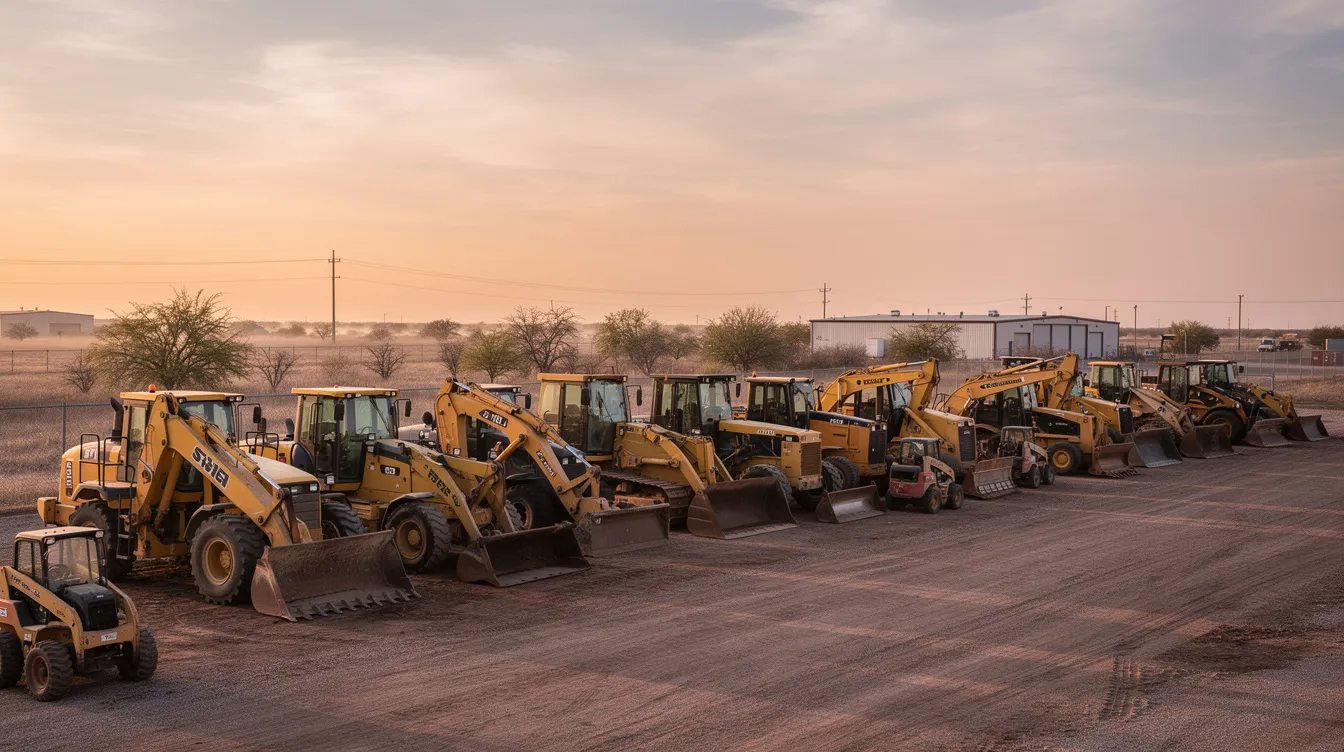
- Heavy industrial, logistics, energy, and infrastructure projects along I-35 and I-10 require large fleets, attachments, and spares, magnifying the financial impact of weak asset controls.
- Tight bid competition and thin profit margins leave almost no room for waste, making operational efficiency the primary margin lever.
- Ongoing labor constraints mean that equipment and tools must be ready when crews are, because wasted time waiting on a missing machine or attachment burns labor hours that cannot be recovered.
What a Building Asset Strategy Means for Contractors
A building asset strategy in construction operations is a deliberate system for selecting, owning, renting, tracking, maintaining, and disposing of every physical asset used to deliver work. A building asset generates income through rent, leasing, or business operations, and in a contractor’s world that income takes the form of cost recovery embedded in each job’s pricing—for example, when an excavator’s ownership and maintenance costs are allocated across the projects where it is deployed.
Construction asset management maximizes value and cuts costs by covering both powered assets (cranes, excavators, aerial lifts, generators) and non-powered assets (buckets, concrete forms, scaffolding, trench boxes, jobsite trailers, PPE inventories) that often escape formal control. Building assets include the structure, integrated systems, and digital information tied to those physical items. Track them as resources in planning, maintenance, and economics, not as afterthoughts.
Key elements of a sound strategy:
- Distinguish between owned, leased, and rented assets, because each choice affects cash flow, tax treatment, insurance exposure, and vulnerability to tariff-driven price swings.
- Define who owns decisions at each level: fleet mix and capital policy at the executive and finance level, deployment and utilization at operations, and loss prevention and inspection at the field leadership level.
- Recognize that building asset management involves maintenance and capital improvements as ongoing disciplines, not one-time purchases.
Cost Pressures: Tariffs, Elevated Input Prices, and Margin Risk
The tariff environment is not theoretical for construction firms. As reported by Construction Executive, national equipment manufacturers have publicly cited tariff-related costs reaching into the hundreds of millions of dollars that flow directly into product pricing. The June 2026 tariff update means that even equipment assembled with significant domestic content may still face duties unless at least 85% of the steel or aluminum by weight is melted and rolled in the U.S.
What this means for building asset decisions on the ground:
- Replacing a failed dozer, lift, or truck in 2026 means paying today’s tariff-impacted price, so preventive maintenance and disciplined utilization now directly protect margin.
- Key metrics for building assets include net operating income and capitalization rate; when input costs rise, the capitalization rate on owned equipment tightens, making every idle hour more expensive.
- The Texas construction outlook for 2026 points to robust demand in industrial, energy, and infrastructure projects across the region. The combination of a strong backlog and higher costs means replacement parts and new machines are more expensive, making asset missteps particularly costly.
- Market supply and demand dynamics affect the financial viability of building assets, and current supply chain disruptions in steel- and aluminum-dependent products keep lead times unpredictable.
Protecting profit margins in this environment requires disciplined planning, not speculative growth. Accurate project estimates improve financial management, and that accuracy starts with knowing what your assets really cost to own, operate, and maintain.
Where Margins Leak: Everyday Asset Problems on Active Jobs
The most damaging asset losses on construction sites rarely arrive as dramatic events. They accumulate quietly across active projects and show up as slow margin fade on final job cost reports.
Consider common scenarios along the San Antonio metro and I-10 corridor:
- Idle equipment sitting on a healthcare expansion or logistics project for weeks still carries ownership, insurance, and financing costs that the estimate never fully recovered. Industry data shows that heavy equipment fleets often experience 30 to 40 percent idle time, representing enormous unrecovered investment.
- A foreman cannot locate an attachment and orders a duplicate rental. Rental costs on emergency short-term agreements run significantly higher than planned rates, eating margin on that job and inflating costs for future bids.
- Smaller tools and consumable kits simply disappear without accountability. Non-powered equipment, hand tools, and safety gear often escape formal tracking, and replacement spending grows invisibly across new projects.
- Poor data leads to $88.69 billion in annual rework costs across the construction industry. Bad data costs the construction industry $88.69 billion annually, with 4 to 6 percent of total project costs related to rework driven by inaccurate asset information, scheduling errors, and incomplete records.
- Multi-site operations across the 22-county region amplify the risk of unproductive transfers, partial loads, and machines stranded between job sites.
These leaks compound. A single project might absorb a few thousand dollars in hidden asset waste. Multiply that across a year’s workload, and the margin erosion can determine whether a contractor finishes the year profitable or underwater.
Core Elements of a Modern Building Asset Program
A structured building asset program does not require enterprise-scale technology on day one. It requires commitment to visibility, process, and accountability.
- Establish a single, up-to-date asset register listing every owned and long-term leased asset with purchase date, cost, asset location, status, and responsible party. Use management software rather than spreadsheets when the fleet justifies the investment.
- Implement job-level utilization tracking that captures run hours, idle time, and downtime for major machines so leaders can improve utilization and redeploy or dispose of chronic underperformers. Industry benchmarks suggest targeting 60 to 75 percent utilization of available hours for core heavy equipment.
- Quarterly inventory audits are the minimum standard for accuracy. Run inventory audits at least quarterly to catch discrepancies between records and reality before they become significant losses.
- Standardize check-in and check-out procedures for small tools, attachments, and consumable kits with simple mobile workflows suited to field conditions, not complicated office-only systems.
- Connect asset data into project cost codes so that ownership, rental, maintenance, and fuel costs hit the correct jobs. This gives estimators an honest picture of asset-driven margin performance and enables informed decisions on future bids.
Using Management Software and Real-Time Data to Improve Utilization
Digital construction management tools have matured enough that even mid-sized merit shop contractors can access actionable insights without massive capital outlays. Modern construction asset management platforms and fleet systems can integrate GPS, engine hours, maintenance history, and job assignments into one view.
Practical use cases for South Texas operations:
- Real-time data on asset location and run hours allows dispatchers along the I-35 corridor to reassign equipment quickly, reducing idle time on one project while avoiding unnecessary rentals on another. Real-time asset tracking improves resource allocation across sites and gives construction managers visibility they cannot achieve with phone calls and spreadsheets alone, so dispatchers avoid making decisions based on phone calls, spreadsheets, or incomplete updates.
- Automated maintenance alerts tied to hours-based service intervals help maintenance operations schedule work when machines will already be in the yard, cutting transport costs and downtime.
- Solutions like the Kin T200 track tools and equipment in real time, helping recover lost tools faster on construction sites and addressing one of the most persistent sources of margin leakage.
- MachineMetrics increased utilization by 30% using machine monitoring, demonstrating that performance data from connected machines can deliver measurable productivity gains when paired with management discipline.
- Even starting with low-cost tracking tags on high-loss tools or basic telematics on a core group of heavy machines can provide real-time insights that streamline operations and cut waste. The platform or system chosen matters less than the process and leadership expectations behind it.
Software is only effective when paired with clear processes, field-team training, and consistent leadership follow-through.

Own, Rent, or Lease: Asset Strategy Decisions When Costs Are High
Evaluating a building asset requires analysis of financial, physical, and market factors. In a high-cost, tariff-sensitive environment, the own-versus-rent decision is not a preference; it is a financial control that shapes margin outcomes.
- Evaluate each fleet category (earthmoving, lifting, trucking, specialty trades gear) through a simple lens: own the base-load demand that appears on most jobs, rent peak-load demand that arises only on select projects, and lease select long-duration needs when it optimizes cash flow.
- Owning critical core machines can hedge against future price spikes driven by tariff pressure on construction costs. Conversely, owning niche or highly seasonal assets at peak tariff prices can overcapitalize the business and drag on the balance sheet.
- Legal, environmental, and regulatory risks should be verified during due diligence before any major acquisition. Coordinate purchase and lease decisions with broader financial planning, including surety capacity and available tax deductions for contractors.
- Require estimators and project managers to document actual rental days, rate changes, mobilization fees, and damages so that future bids use realistic assumptions rather than optimistic guesses.
- Conduct an annual or semiannual fleet review analyzing reliability, utilization, repair costs per hour, and resale value. Decide which assets to keep, rotate to less critical work, or sell before major capital repairs become necessary. This decision-making process should be data-driven, not sentimental.
Maintenance, Safety, and Loss Prevention as Margin Tools
Maintenance and safety are financial levers as much as compliance tasks. Deferred maintenance can lead to significant future capital expenditures that dwarf the cost of scheduled service, and lifecycle management is essential to preserve or enhance the value of a building asset over its working life.
- Regular maintenance reduces unexpected breakdowns by 30%, keeping crews productive and projects moving forward on schedule. Construction equipment maintenance extends asset lifespan significantly, which means every dollar spent on prevention returns multiples in avoided replacement cost.
- Well-maintained equipment improves safety for workers. Well-maintained cranes, aerial lifts, trucks, and power tools reduce incident risk, workers’ compensation exposure, and unplanned shutdowns. Safety training reduces accident risk on construction sites, and construction companies should hold regular training sessions tied to equipment operation, inspection, and hazard recognition.
- Regular training ensures consistent implementation of safety protocols across job sites, which is especially important when field teams rotate between projects across a multi-county footprint.
- Detailed maintenance records help prove regulatory compliance during inspections, audits, and insurance reviews. This documentation also supports better service planning and vendor accountability.
- Practical loss prevention includes secure laydown areas, serialized tagging of high-value tools, controlled key and fob access for major machines, and end-of-shift counts that are realistic for busy construction sites. Avoid overly burdensome sign-out procedures that slow production; use simple digital checkouts or crew-level assignments instead.
- Treat near misses, equipment incidents, and recurring repair patterns as data that informs training, equipment specification, and supplier choices for new projects.
Roles and Accountability: Who Owns Building Asset Discipline?
Building asset discipline fails when no one owns it. Each role in a South Texas construction firm carries specific accountability:
- Owners, CFOs, and operations executives own capital strategy: fleet size, replacement policies, rent-versus-own thresholds, and acceptable utilization targets. They set the investment framework and risk tolerance.
- Estimators incorporate realistic equipment and asset costs into bids using historical job cost and utilization data instead of generic industry percentages. On complex industrial and public work, this accuracy separates winning bids from money-losing ones.
- Project managers align schedules, means and methods, and asset plans. They ensure critical machines arrive and leave when needed and that rental contracts close promptly at demobilization, which directly controls costs.
- Superintendents and foremen serve as front-line stewards: running checklists, performing inspections, enforcing loss prevention, and communicating upcoming needs or maintenance windows before they become emergencies.
- A simple, one-page responsibility matrix listing asset-related tasks by role gives the entire organization clarity and removes the ambiguity that lets problems persist.
30-Day Action Plan for South Texas Contractors
Theory without execution changes nothing. Here is a realistic plan for the next month:
Week one: Pull a complete list of all owned and long-term leased equipment and compare it to what is actually in the yard or on jobs. Identify missing serial numbers, outdated records, and chronic problem categories. This is the foundation of control and visibility.
Week two: Analyze utilization for your top ten highest-value assets over the last 6 to 12 months, even with rough data. Spot underused machines or frequent rentals that signal a mismatch in fleet mix. Flag any asset where the cost recovery ratio falls below 100 percent.
Week three: Bring field and office leaders together to agree on a simple, standard process for requesting, assigning, and returning equipment. Define who approves rentals, how they are coded to jobs, and what happens at demobilization. Integrate this process into your existing operations workflow.
Week four: Choose one enabling tool, whether basic asset tags, upgraded telematics, or a pilot management software module, and deploy it on a limited number of machines across a representative set of jobs. Measure the impact over the next quarter before scaling.
Connect these steps to broader financial planning by revisiting your cash flow guidance and related resources that support stronger finance and operations discipline.

How ABC South Texas Supports Smarter Asset Decisions
ABC South Texas regularly shares market intelligence, including corridor-specific insights on I-35 industrial activity and statewide economic indicators, that help members align fleet decisions with real demand rather than speculation.
- Leadership and project management education offered through the chapter can incorporate modules on job cost control, construction asset management basics, and field accountability for tools and equipment.
- Apprenticeship and craft training in trades such as Electrical, Carpentry, Pipefitting, Plumbing, and Sheet Metal reinforce correct equipment use, basic maintenance operations, and safety practices, reducing abuse, downtime, and incident risk from the ground up.
- Peer networks, committees, and events give construction professionals a forum to compare practical approaches to utilization tracking, rental policies, technology adoption, and compliance practices in a South Texas context.
The contractors who protect margins in 2026 will be the ones who treat every machine, tool, and attachment as an investment that must earn its way. Start with one step this month: pull your asset register, check it against reality, and build from there. Engage ABC South Texas resources for follow-up education, benchmarking, or peer discussion on the practices that matter most to your business.
Frequently Asked Questions
Below are answers to common questions about this topic.
How is a “building asset” different from other construction resources?
A building asset is any physical item with lasting economic or operational value used to deliver construction work, such as heavy equipment, vehicles, tools, formwork, and integrated systems. It differs from short-term consumables like fasteners, fuel, or expendable supplies, as well as from purely financial resources like credit lines or bonding capacity. The defining characteristic is that a building asset has a useful life that extends across multiple projects and must be managed for utilization, maintenance, and eventual disposal or resale.
What utilization rate should South Texas contractors aim for on core equipment?
The optimal rate varies by trade, project mix, and season, but many contractors target 60 to 75 percent of available hours for owned heavy iron. The key is to establish internal benchmarks based on your own fleet and project types, then track and improve utilization against them using real-time data. Even small businesses with limited fleets benefit from setting a baseline and consistently measuring against it.
Do smaller subcontractors really need construction asset management systems?
Even small firms benefit from simple, structured asset tracking. While they may not need enterprise-level ERP systems immediately, starting with spreadsheets, physical tags, and basic telematics on high-value machines creates the visibility necessary to control costs. As the fleet and project footprint grow, scaling to more robust solutions becomes easier when the foundational data and process discipline are already in place.
How do asset decisions interact with bonding and financial capacity?
Large capital purchases affect balance sheets, debt ratios, and bonding capacity. Contractors should coordinate fleet strategies with their surety advisors and financial planners, ensuring that equipment investments strengthen rather than strain their bonding position. Understanding these dynamics before making major acquisition decisions prevents surprises during prequalification and bid season.
Can better asset management really move the needle on profit margins?
For asset-intensive contractors, even modest reductions in idle time, duplicate rentals, and tool loss can translate into meaningful margin improvement across a full year’s workload. When 30 to 40 percent of heavy equipment hours are idle nationally, the recovery opportunity is significant. In a region with strong but competitive demand like South Texas, the contractors who improve decision-making around their fleet and tools will outperform those who treat asset costs as fixed overhead.


