


Key Takeaways
- A strong culture and safety program is more than compliance. For South Texas contractors, it is an operating discipline that can help reduce incidents, rework, schedule disruption, and avoidable overtime.
- Regional conditions matter. Extended heat, humidity, corridor logistics, and tight labor availability raise the cost of weak safety leadership on projects in San Antonio and across South Texas.
- The most useful executive question is not whether the company has a written safety program. It is whether field behavior is reducing interruptions, contingency burn, and recurring jobsite friction.
- A practical way to evaluate progress is to review safety activity alongside project controls, using a simple monthly scorecard that combines leading and lagging indicators.
- A useful next step is to benchmark with ABC South Texas STEP and strengthen weak areas through the chapter’s safety programs and education and training programs.
Why Culture and Safety Matter to Operations in South Texas Construction
Culture and safety show up in how crews work when schedules tighten, heat rises, and supervisors balance production against risk. For commercial and industrial contractors in San Antonio and across South Texas, that day-to-day behavior affects operational stability far more than many firms acknowledge.
ABC South Texas positions safe, ethical work as part of serving the region’s merit shop construction industry, and that framing fits the business reality on the ground. When safety is treated only as a compliance task, avoidable problems tend to surface elsewhere: downtime after an incident, rework from rushed execution, overtime to recover lost production, and added strain on already thin crews.
OSHA’s business-case guidance makes that connection directly. OSHA says employers that invest in safety and health can reduce fatalities, injuries, and illnesses while lowering workers’ compensation costs, medical expenses, replacement-training costs, accident-investigation costs, and potential penalties. In practical terms, culture is what makes those formal safety efforts consistent in the field.
For South Texas contractors, the cost-sensitive categories tied to culture and safety often include:
- Injury-related direct costs and lost productivity
- Overtime used to recover from disruption
- Rework tied to rushed or poorly coordinated tasks
- Turnover, onboarding, and reduced crew continuity
- Insurance pressure over time, including experience and claim-history effects
- Common reliability concerns when owners evaluate contractors
Where Weak Culture Turns Into Real Cost
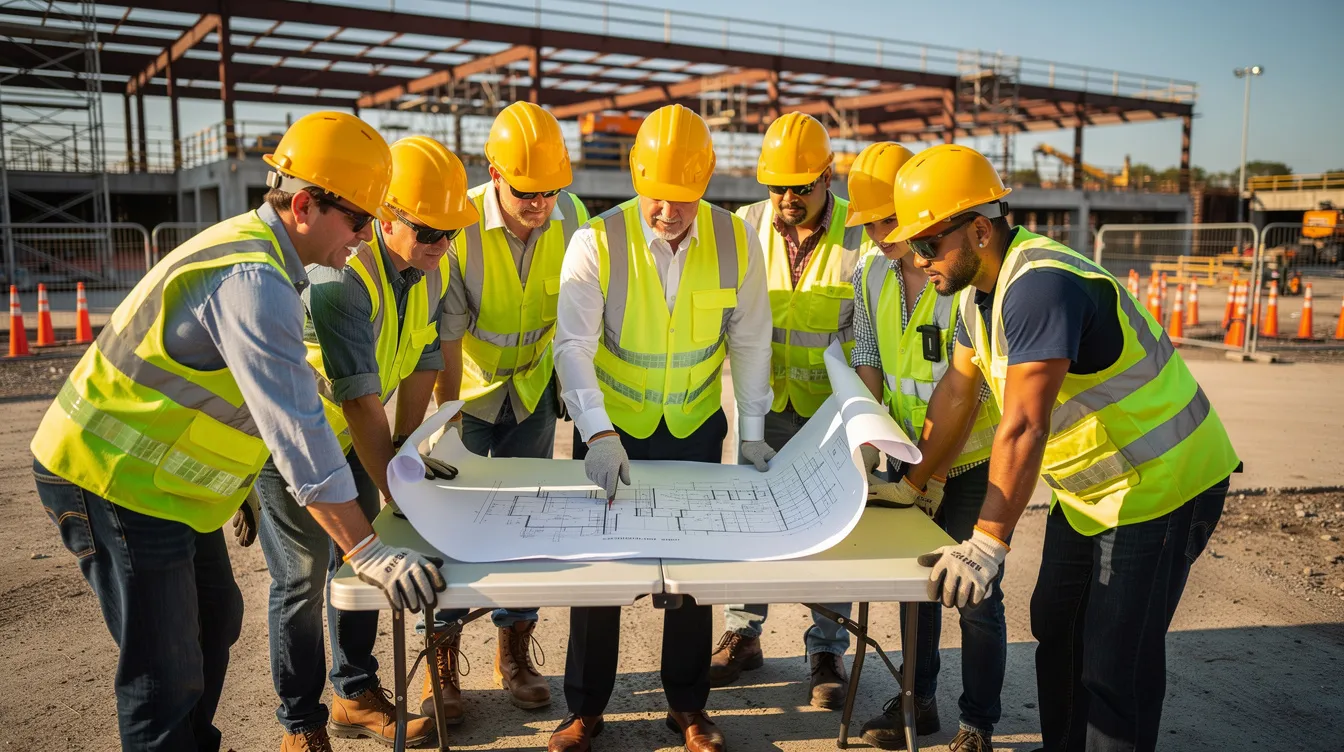
Most contractors do not lose performance because of one line item called “safety.” They lose it through a chain of small failures: skipped pre-task planning, weak housekeeping, unclear stop-work authority, rushed starts, incomplete hazard correction, or supervisors who treat daily talks as paperwork.
Once an incident happens, the cost rarely stops at medical treatment. Supervision time, investigation, work interruption, schedule recovery, crew reshuffling, and owner communication all consume time and money. OSHA’s $afety Pays tool exists for this reason: it helps employers estimate both direct and indirect injury costs using company profit margin and injury-cost data.
That is why the most common leak paths are operational, not abstract:
- Incident-related downtime that forces overtime later in the week
- Lost crew continuity when an experienced worker is injured or leaves
- Rework after shortcuts on concrete, structural, roofing, or finish work
- Temporary shutdowns for investigation, correction, or owner review
- Longer-term insurance consequences from repeated claims or poor loss trends
Fall hazards deserve special attention because they combine immediate injury exposure with schedule risk. On South Texas jobs, that may mean ladder misuse during interior fit-outs, incomplete edge protection on roofing work, or scaffold issues during exterior phases. Even when a serious fall does not occur, near misses and repeated deficiencies can signal a weak culture at the point of work.
Because workers’ compensation rules vary by state and business circumstances, contractors should confirm current requirements and coverage obligations in the jurisdictions where they operate. The larger point is simpler: even when firms focus on premium cost, the bigger financial exposure often comes from the disruption that follows an incident.
Why South Texas Conditions Raise the Stakes
Regional conditions make culture and safety more than a best-practice discussion. They make it a management necessity.
BLS reported that construction and extraction workers experienced 1,032 fatalities in 2024 nationwide. Those figures don’t describe every South Texas jobsite, but they reinforce the industry’s overall risk level. The Texas state table for 2024 also shows a construction fatal injury rate figure of 9.5.
South Texas adds its own pressures on top of that baseline. Crews often work through long heat seasons, humidity, corridor traffic, dispersed project locations, and labor constraints, leaving little slack when something goes wrong.
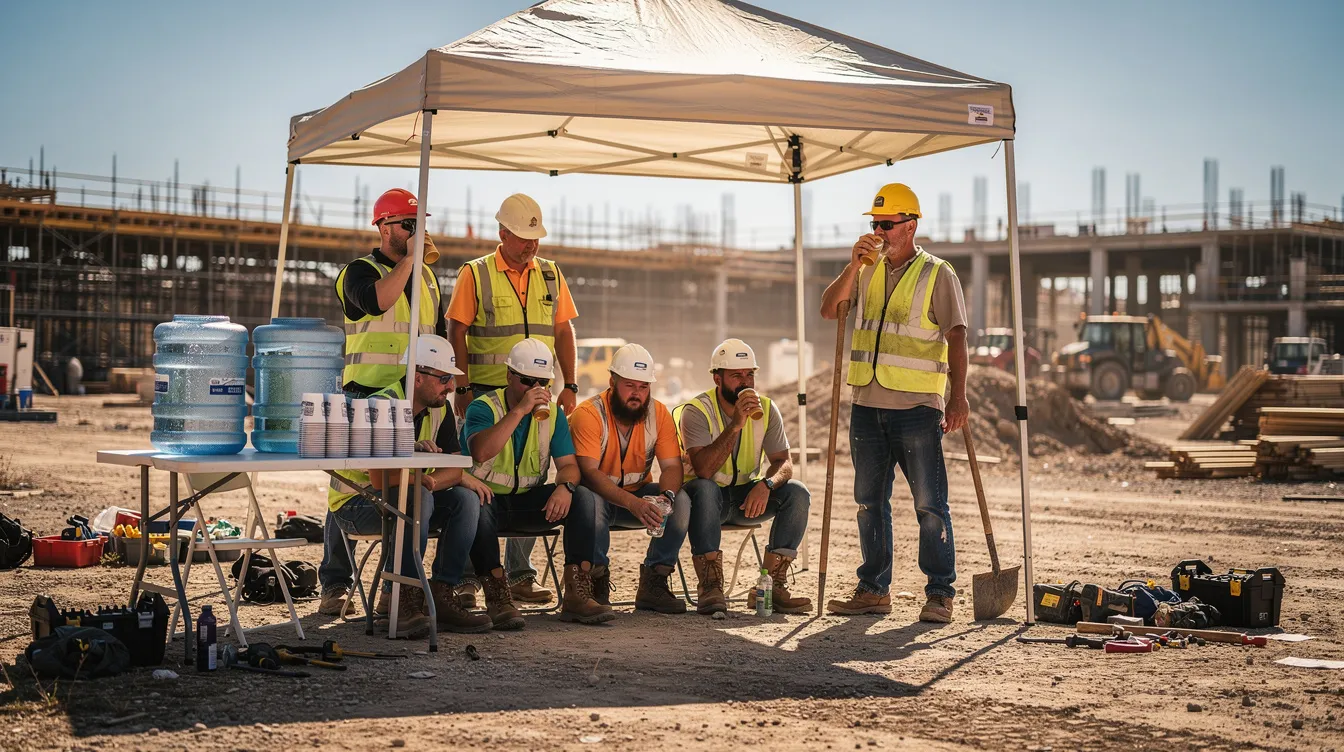
Heat is the clearest example. OSHA says the best way to prevent heat illness is to remove or reduce the heat hazard through engineering controls or work practices. OSHA also advises employers to create a written heat-illness prevention plan, assign daily oversight, and account for gradual heat-tolerance buildup for new or returning workers.
For South Texas contractors, that can translate into:
- Earlier starts for high-exertion exterior work
- Water, shade, and planned recovery breaks
- Task sequencing that avoids peak heat where possible
- Supervisor authority to slow, pause, or re-sequence work when conditions worsen
- Deliberate acclimatization for new and returning workers
Texas employers can also use free, confidential help from the Texas Occupational Safety and Health Consultation program to develop workplace heat-hazard programs. That makes heat planning not just a regulatory talking point, but an actionable operating step.
Corridor and multi-site work add another layer. Projects along I-35 and I-10 often involve moving crews, compressed access, traffic exposure, and long travel days. When culture is weak, those pressures push people toward shortcuts. When culture is strong, supervisors have support to adjust the plan before a bad decision becomes an injury, shutdown, or missed milestone.
What Leadership Actually Does in a Strong Culture and Safety Program
Strong culture and safety do not come from a manual alone. They come from leadership behavior that crews can see.
That starts at the top, but it does not end there. Executives, project managers, superintendents, and foremen each shape whether safety is treated as a real operating value or as an after-the-fact reporting task.
Leadership behaviors that usually strengthen field culture include:
- Reviewing safety performance alongside budget and schedule in project meetings
- Looking at hazards during site walks instead of relying only on reports
- Using daily huddles to address current conditions, not generic topics
- Treating near-miss reporting as useful intelligence rather than blame material
- Backing supervisors when they stop or adjust unsafe work
- Involving workers in hazard identification and corrective planning
Toolbox talks and daily huddles remain important because they create a regular moment to align the crew on that day’s hazards, sequencing, weather conditions, and expectations. Their value is practical: better daily communication can improve hazard awareness and give supervisors a better chance to catch problems before they become recordables.
ABC South Texas supports this kind of leadership development through its safety programs and broader education and training offerings, including safety courses, leadership development, and apprenticeship pathways.
A Monthly Review Framework Executives Can Actually Use
If this topic stays philosophical, it usually loses traction. South Texas contractors need a practical way to judge whether culture and safety are helping operations or just generating more paperwork.
A simple monthly review can do that. Instead of asking only whether incident counts rose or fell, leadership can compare field-safety activity with project-control signals already visible in the business.
| Monthly review area | What to look at | What the pattern may suggest |
|---|---|---|
| Planning discipline | Pre-task plan completion, quality of daily huddles, supervisor participation | If planning is inconsistent, later disruption is more likely to show up as overtime, confusion, or preventable rework |
| Reporting culture | Near-miss reports, crew-raised concerns, follow-up quality | Higher reporting can indicate trust; a sudden drop may indicate disengagement rather than fewer hazards |
| Correction speed | Open hazards versus closed hazards after site walks | Slow closeout often points to weak accountability or overloaded supervision |
| Heat execution | Use of water, shade, planned breaks, and acclimatization steps on high-heat days | A written plan without field execution is a warning sign, especially during long South Texas summer stretches |
| Outcome pressure | Recordables, lost-time cases, disruption-related overtime, and rework hours | If these climb while planning and reporting weaken, safety issues are likely bleeding into operations |
This framework creates a clearer finance-and-operations angle than a safety binder review alone. It helps leaders ask better questions:
- If near-miss reporting drops sharply, is the job actually safer, or are people less willing to speak up?
- If overtime rises after repeated small incidents, is the firm paying twice for weak planning?
- If one project closes hazards quickly and another lets them linger, what is different in field leadership?
One of the most useful habits is to watch for mixed signals instead of chasing a single number. If incident counts stay flat but hazard corrections close faster and disruption-related overtime falls, culture may be improving before lagging results show it clearly. If counts look stable while reporting drops and rework rises, leaders may be looking at underreporting rather than genuine improvement.
Use Benchmarking to Test Assumptions
One challenge with culture and safety is that companies often grade themselves too generously. That is where STEP can be useful.
ABC South Texas says STEP was established in 1989 by contractors for contractors. Its materials also describe a 20-point guide for starting, updating, or auditing a company-wide safety program, with both lagging-indicator data and leading-indicator practices built into the review.
That makes STEP useful here not because it is an award, but because it gives leaders a structured way to test whether their assumptions hold up under review. For companies that already have policies in place, it can highlight uneven execution. For smaller firms, it can provide a starting structure without requiring them to build a program from scratch.
The important point is simple: use a benchmark, then connect the findings back to disruption, rework, training gaps, and project reliability.
How ABC South Texas Can Help Close the Gaps
Once a contractor identifies weak points, the next step is not more slogans. It is targeted training and support.
The ABC South Texas safety programs page says the chapter offers OSHA 10-Hour and 30-Hour training, First Aid and CPR, VitalCog, safety mixers and seminars, and help with setting up safety plans and programs. Its education and training page also highlights an NCCER-certified apprenticeship program along with leadership development and task-specific training.
Those resources fit best when tied to a specific need:
- If supervisors don’t recognize hazards early enough, OSHA training may help build baseline knowledge.
- If onboarding is inconsistent, apprenticeship and structured training pathways can reinforce expectations from day one.
- If crews are struggling with communication, recurring seminars, leadership development, and regular safety engagement may be more useful than another policy memo.
- If the company lacks a reliable framework, STEP can help organize improvement priorities.
That combination keeps the focus on execution rather than compliance theater.
First Steps for This Year
For executives who want culture and safety to strengthen operations this year, the best first move is a disciplined review, not a sweeping rewrite.
- Review the last 12 months of incidents, near misses, overtime, rework, and turnover on active or recent projects.
- Use a monthly review framework on one or two jobs for the next 60 to 90 days.
- Pay particular attention to heat planning, fall protection execution, pre-task planning, and supervisor follow-through.
- Benchmark the company through STEP to see where current systems are strong and where they are uneven.
- Use ABC South Texas safety programs or education and training to address the first clear gap you find.
The goal is not to create more paperwork. It is to reduce preventable disruption.
For South Texas contractors, strong culture and safety are ultimately an operating choice. Companies that build trust, plan work well, and support field leaders when they make safe decisions often protect performance more consistently over time.
Frequently Asked Questions
Below are answers to common questions about this topic.
How can I tell whether my company has real culture and safety strength or just good paperwork?
Look for evidence in behavior, not just documentation. Frequent near-miss reporting, consistent pre-task planning, visible supervisor engagement, and prompt hazard correction usually say more than a binder’s thickness. A monthly review that compares leading activity with outcomes like overtime, rework, and incident trends gives a more realistic picture.
Why does heat planning matter so much in South Texas?
Because heat is both a worker-safety issue and an operational issue. OSHA recommends written planning, daily oversight, and work-practice adjustments to reduce heat exposure. In South Texas, that can directly affect productivity, medical-response risk, and whether a crew can keep working safely through long summer conditions.
Should smaller contractors bother with formal benchmarking?
Yes, especially if one serious incident would hit the company hard. A smaller contractor may not need a complex internal system, but it can still benefit from a structured review process. STEP can provide that framework, while training through ABC South Texas can help fill practical gaps without creating unnecessary bureaucracy.
How quickly can stronger culture and safety improve performance?
Some effects can show up fairly quickly through fewer disruptions, more reliable daily production, and better planning discipline. Other effects, such as claim history and insurance impacts, usually take longer. That is why it helps to track both immediate operating indicators and longer-term cost trends.
How does this apply when subcontractors perform much of the work?
General contractors and construction managers still set the tone. Expectations for pre-task planning, orientation, heat controls, housekeeping, and stop-work authority should be clear for every employer on site. Culture weakens quickly when subcontractor crews see inconsistent enforcement or mixed priorities.


